How to Find Amazon Freebies, Samples, and Low-Cost Deals Without Wasting Time
Key Takeaways
- Amazon 'freebies' usually mean very low-cost deals, digital perks, samples, or bonus items, not always completely free physical products.
- Amazon savings appear as product page coupons, limited-time deals, Subscribe & Save discounts, multi-buy offers, and trial products.
- Smart deal hunting involves finding useful items under budget, focusing on everyday essentials, and stacking coupons or subscription discounts.
- Most rewarding categories for practical Amazon finds include Home/Kitchen, Tech Accessories, Beauty/Personal Care, and Office/Utility.
- Avoid bad deals by checking product quality, reading recent reviews, comparing sizes, and ensuring the final checkout price is justified.
- Use curated content like Coupinify's Amazon store deals page to filter for practical, worthwhile offers and discover savings patterns.
Amazon is one of the first places people check when they want a deal fast. But for a lot of shoppers, the real question is not just how to buy something cheaper. It is how to find the kinds of offers that feel almost too good to skip: freebies, low-cost trial items, digital perks, hidden coupons, and small practical deals that make everyday shopping feel smarter.
That is part of what makes Amazon so appealing. You are not only shopping for products. You are also searching for value, convenience, and those occasional finds that make the order feel better than expected.
The problem is that Amazon does not present everything in one neat “freebies” section for most shoppers. Some offers show up as coupons, some as limited-time discounts, some as subscribe-and-save opportunities, and some as product pages that become much cheaper once you combine the right promotion at checkout. That means shoppers often miss the best low-cost opportunities simply because they do not know where to look.
If your goal is to save more while shopping Amazon, the good news is that there are still practical ways to find worthwhile offers without spending an hour digging through random product pages.
What People Usually Mean by “Amazon Freebies”
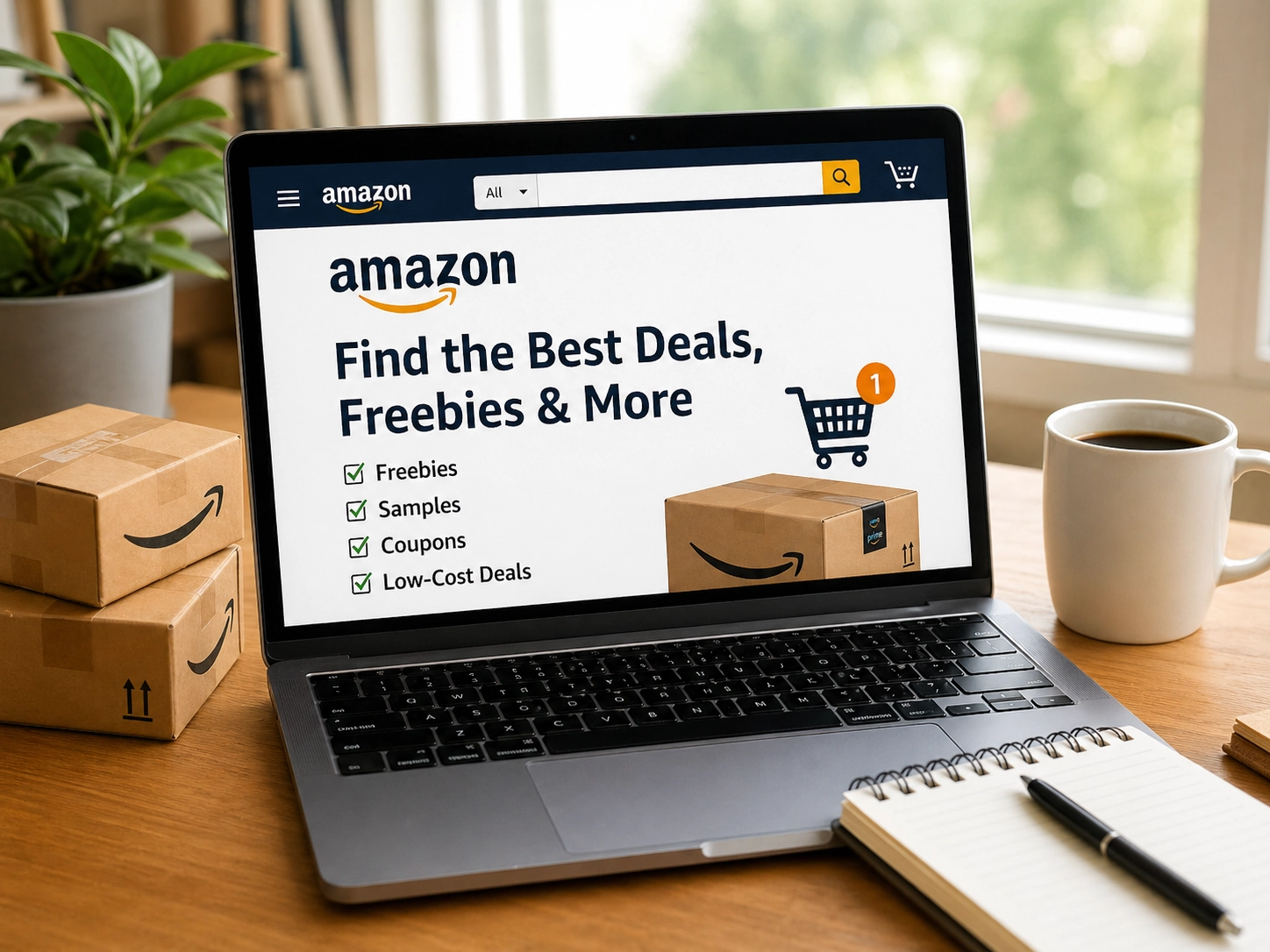
When people search for Amazon freebies, they are not always talking about truly free physical products with no conditions at all.
In practice, the term usually covers a few different kinds of savings:
▪️products that become extremely cheap after coupons or promo stacking
▪️free digital perks or trial offers
▪️free samples tied to specific programs or categories
▪️bonus items included with a purchase
▪️low-cost essentials that feel nearly free compared with standard pricing
That distinction matters because it sets better expectations. If you go in expecting unlimited no-strings-attached products, you will probably be disappointed. But if you think in terms of high-value, low-cost opportunities, Amazon becomes much more useful.
A lot of shoppers also mix together “freebies” and “good Amazon finds.” In reality, the best value often comes from combining small savings rather than chasing only the word free.
Where Amazon Savings Usually Show Up
The easiest mistake shoppers make is looking for one magic page that contains every good offer. Amazon shopping usually does not work like that.
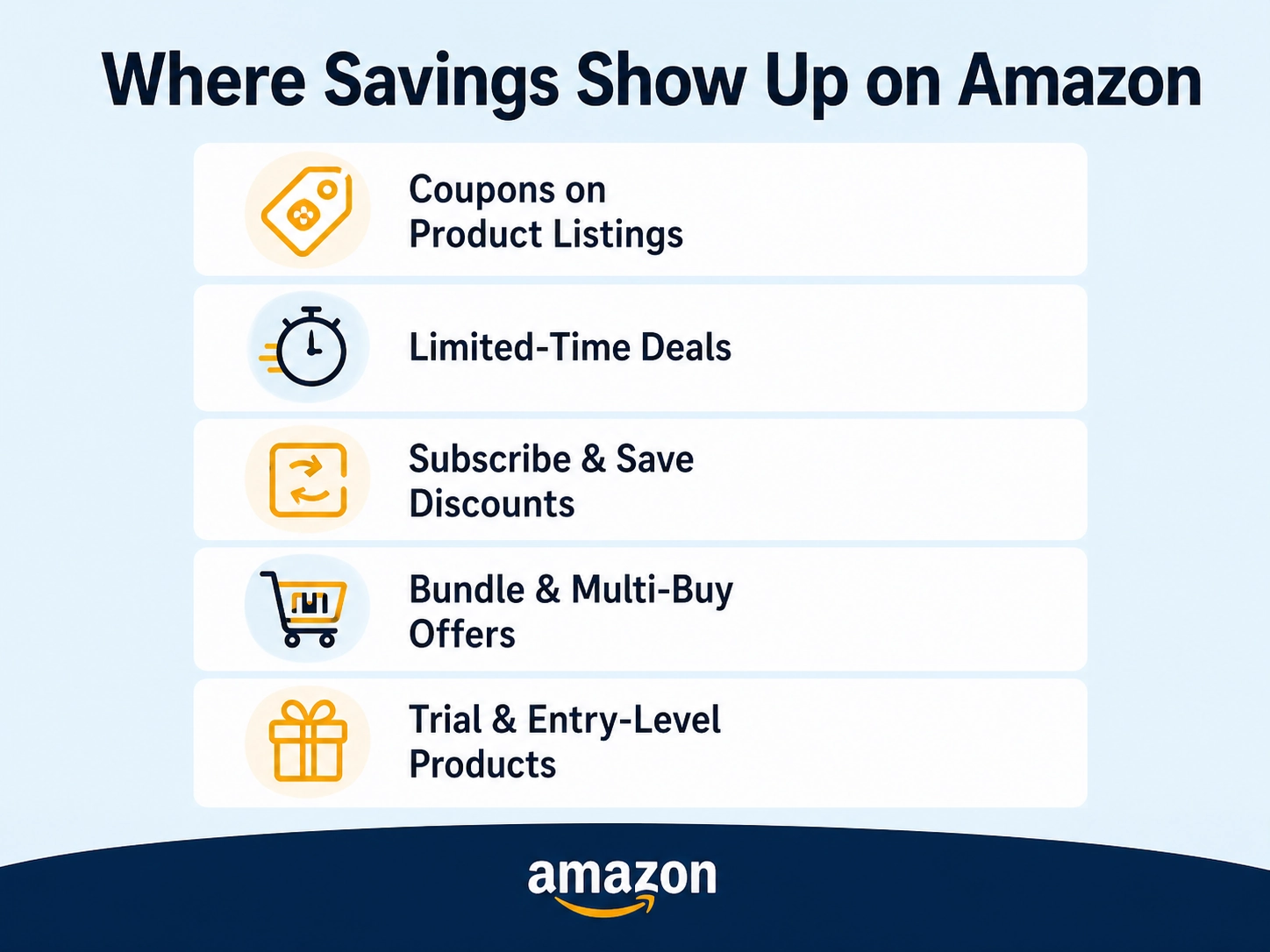
Instead, savings tend to appear across several patterns:
Coupons on Product Listings
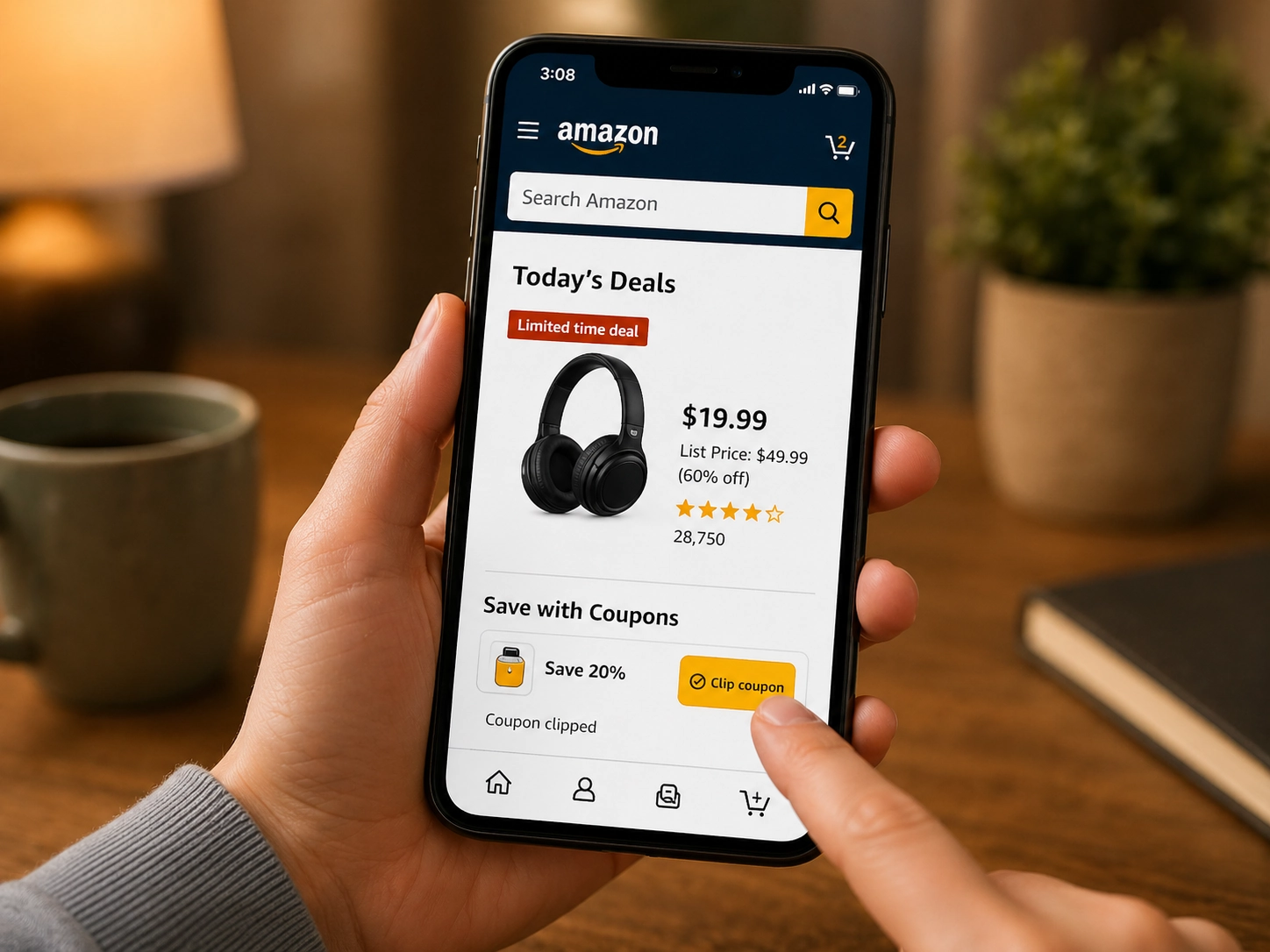
Some Amazon listings include clip coupons directly on the product page. These are often one of the easiest ways to reduce the total price without doing much extra work. They matter most on household items, personal care, tech accessories, and impulse-buy categories.
Limited-Time Deals
Many strong offers are temporary. They may only last a few hours or one day, which means timing matters. These are the kinds of deals that often create the feeling of finding something before the price goes back up.
Subscribe & Save Discounts
For repeat-use items like household supplies, coffee, snacks, cleaning products, or personal care items, subscription discounts can quietly become one of the most practical ways to save.
Multi-Buy or Bundle Offers
Sometimes the better deal is not a single item. It is a bundle, add-on item, or quantity-based discount that lowers the effective cost per unit.
Trial-Friendly or Entry-Level Products
Not every strong deal is a formal freebie. Sometimes the smartest value comes from low-cost first purchases, mini versions, or affordable alternatives that let you try a category without spending much.
The Smart Way to Look for Amazon Freebies and Low-Cost Finds
If you want better results, it helps to search with a plan instead of browsing randomly.
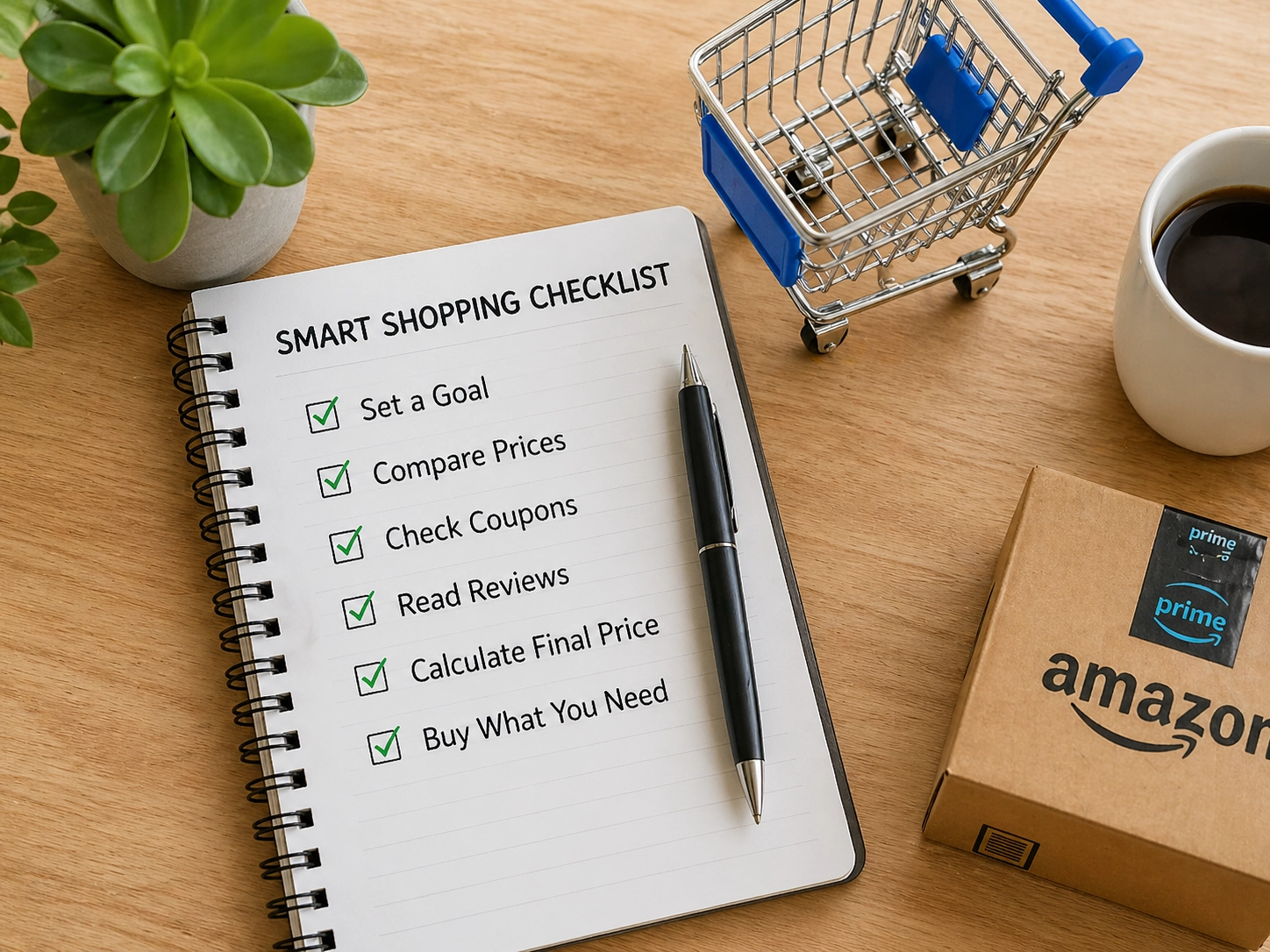
A useful approach is to start with one of these shopping goals:
1. Find Something Useful for Under a Certain Budget
This works well when you want practical value rather than random novelty. For example, instead of searching only for “Amazon freebies,” look for useful categories you already buy from, then narrow by price and available coupon options.
2. Focus on Everyday Essentials
The strongest Amazon savings are often not flashy. They are on things people already need: kitchen tools, phone accessories, storage items, home basics, beauty essentials, pet items, or office supplies.
3. Watch for Stackable Savings
One of the best deal habits is checking whether a product has:
▪️a sale price
▪️a clipped coupon
▪️a subscription discount
▪️or a quantity discount
Even if none of those alone feels impressive, together they can turn a normal purchase into a surprisingly strong deal.
4. Search Seasonally
Amazon deal intent shifts by season. Around holidays, back-to-school, Prime events, and gifting periods, low-cost finds become easier to frame around a need: gifts, home refreshes, party items, travel accessories, or practical household add-ons.
This is one reason Amazon-focused savings content remains useful year-round. Shoppers are not only looking for codes. They are looking for better timing.
Categories Where Amazon Finds Often Feel the Most Rewarding
Some categories are simply better than others when your goal is to find products that feel affordable, useful, and easy to justify.
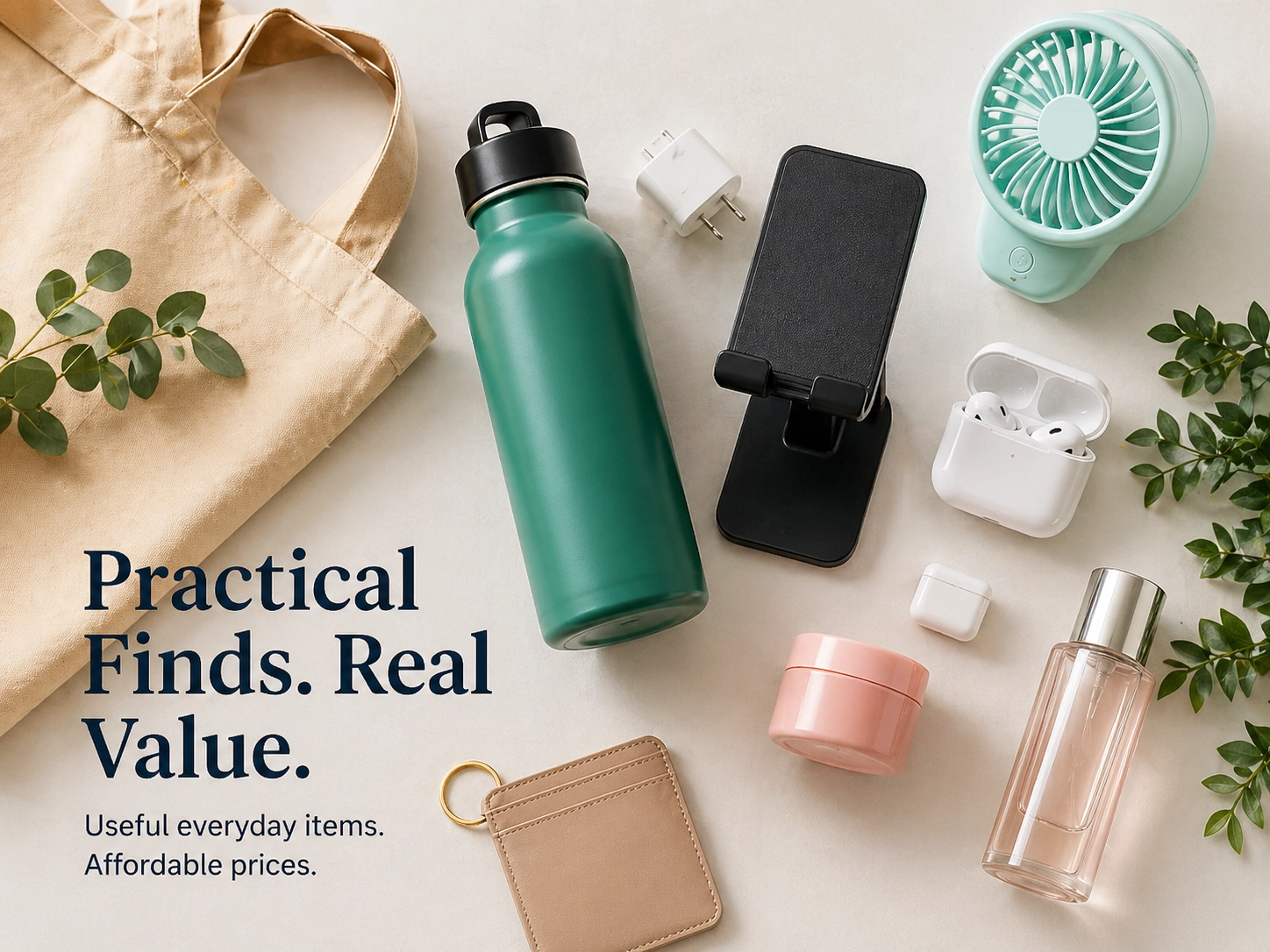
Home and Kitchen
Small organizers, storage containers, kitchen helpers, cleaning accessories, and daily-use household products are often where Amazon shines. These items are practical, frequently discounted, and easy to compare.
Tech Accessories
Charging cables, portable chargers, desk accessories, phone stands, simple audio accessories, and smart add-ons are common “small win” purchases on Amazon. They are often cheaper than expected and easier to evaluate quickly.
Beauty and Personal Care
This is one of the most coupon-friendly categories for many shoppers. Trial-sized items, skincare accessories, and daily-use beauty products often create the kind of low-risk purchase that feels closest to a freebie mindset.
Office and Everyday Utility
Pens, storage pouches, cable organizers, labels, desk accessories, and simple productivity tools are good categories for shoppers who like functional, inexpensive finds.
Seasonal Gift Items
Holiday gifting, Mother’s Day, Father’s Day, stocking stuffers, and practical gift bundles all create strong search demand around small-value items that look more thoughtful than their price suggests.
Are Amazon Freebies Actually Worth Chasing?
Sometimes yes, but only if you define value clearly.
A “freebie” is worth it when:
▪️it is genuinely useful
▪️it fits something you already need
▪️it does not push you into buying unrelated items
▪️it saves real money rather than creating fake urgency
It is not worth it when the excitement of a discount makes you buy something you would never have considered otherwise.
That is why the best Amazon savings content usually does not just list random cheap items. It helps readers filter between good value and unnecessary spending disguised as a deal.
A smart Amazon shopping habit is less about chasing every promotion and more about spotting the offers that match what you were likely to buy anyway.
How to Avoid Wasting Time on Low-Quality “Deals”
Not every discount is a great buy. Some products look cheap for a reason. Others seem discounted only because the starting price was inflated.
A few simple checks make a big difference:
▪️look at price relative to product quality, not just the size of the discount
▪️read recent reviews instead of relying only on star averages
▪️compare pack size, size options, and version differences carefully
▪️avoid buying solely because the countdown or coupon feels urgent
▪️make sure the product still makes sense at the final checkout price
This is especially important with accessories, beauty tools, novelty items, and viral finds. A deal is only good if the product still delivers what you need.
The Best Amazon Finds Are Usually Practical, Not Random
A lot of shoppers imagine the best Amazon deals as surprise luxury finds. In practice, the strongest value often comes from products that solve small daily problems.
Think about items like:
▪️a portable charger you will actually use
▪️a kitchen organizer that improves storage
▪️a simple desk upgrade
▪️reusable home items
▪️practical beauty or wellness tools
▪️affordable add-ons that make a gift feel more complete
That kind of shopping mindset is more sustainable and usually more satisfying. It also makes Amazon content more useful because readers are getting ideas they can actually act on instead of just browsing for entertainment.
How to Use Amazon Savings Content More Effectively
If you are using a savings page, store page, or curated Amazon deal article, the best approach is to treat it like a filter rather than a final decision-maker.
A good Amazon-focused article should help you do one of three things:
▪️discover categories worth checking
▪️identify savings patterns that are easy to miss
▪️narrow your attention to practical offers that feel genuinely worthwhile
That is why curated Amazon savings content still has value even though Amazon itself is huge. People do not always want endless browsing. They want help spotting where the best value is more likely to appear.
If you are comparing options or browsing current offers, it can also help to explore an Amazon store deals page on Coupinify as a cleaner starting point before jumping into product-level decisions.
When Amazon Freebie-Style Shopping Makes the Most Sense
This kind of shopping usually works best when you are:
▪️trying a product category for the first time
▪️looking for low-risk gift add-ons
▪️stocking up on basics
▪️shopping seasonal events on a budget
▪️looking for practical finds rather than premium splurges
It is especially useful for shoppers who enjoy the feeling of finding value but do not want to waste time hunting through thousands of listings.
In other words, the goal is not to treat Amazon like a treasure hunt with no structure. The goal is to shop with enough direction that the good deals reveal themselves faster.
Final Thoughts
Amazon freebies, samples, and low-cost deals can absolutely be worth your attention, but the smartest approach is not to chase the word free too literally. The better strategy is to look for products that combine usefulness, timing, and visible savings in a way that makes the purchase feel easy to justify.
That might mean a clipped coupon on something practical, a discounted bundle, a seasonal low-cost gift idea, or a trial-friendly find that lets you try something new without overspending.
The best Amazon savings are usually the ones that fit into real life. When you focus on value instead of hype, it becomes much easier to spot deals that are genuinely worth clicking.
FAQ
Are Amazon freebies really free?
Sometimes, but not always. Many so-called freebies are better understood as very low-cost deals, coupon-driven items, samples, or bonus-value offers rather than completely free physical products.
What is the best way to find Amazon deals?
The most practical method is to combine category-based browsing with coupon checks, timed deals, and low-cost essentials rather than searching randomly.
Are Amazon coupons worth using?
Yes, especially on everyday-use products. They are one of the easiest ways to reduce the final checkout price without changing much about how you shop.
What kinds of Amazon deals are usually the most useful?
Practical categories such as home items, tech accessories, beauty products, office tools, and seasonal gift items often provide the most useful value.