How to Keep Your Drink Safer During Summer Nights Out and Events
Key Takeaways
- Drink safety relies on small habits: keep drink with you, stay with trusted people, know transport, and pay attention to unclear situations.
- Most risky drink situations occur in ordinary moments; if unsure where a drink has been or who accessed it, replace it immediately.
- Before going out, prepare: charge your phone, bring essentials like ID, know the venue, and plan your ride home. A compact charger helps.
- Keep drink decisions simple: if you lack confidence about a drink, do not consume it. Receive drinks directly from staff when possible.
- Drink safety accessories like NightCap covers can help in crowded settings, but they reinforce habits; they are not a guarantee of safety.
- A safer night out works in layers: prioritize behavior, people, and planning. Act early if you or a friend feel dizzy or unwell.
Summer nights out rarely stay as simple as the original plan. Dinner can turn into a rooftop bar. A concert can lead to drinks nearby. A beach day can stretch into a late patio hangout. A birthday party can move from one venue to another before anyone notices how late it is.
That movement is part of what makes summer social plans fun. It is also why drink safety should not depend on one perfect rule or one accessory. Most safer choices are small, repeatable habits: keeping your drink with you, staying close to people you trust, knowing how you are getting home, and paying attention when a situation starts to feel unclear.
This guide is part of the broader Coupinify Summer Issue, but it is not about buying more things for the sake of it. It is about knowing which habits matter, when a drink safety accessory can help, and where people often overestimate what one tool can do.
Drink safety usually breaks down in ordinary moments
Most risky drink situations do not start dramatically. They often happen in normal, easy-to-miss moments.
You set your drink down to take a photo. A friend waves you over to another table. A bartender calls your order while your group is talking. Someone offers to grab drinks, but you are not sure who handled what. You leave your cup behind because you think you will only be gone for a minute. The group moves from one venue to another and everyone gets distracted.
None of these moments automatically means something bad will happen. The point is that drink safety gets weaker when the chain of control becomes unclear. Once you do not know where a drink has been, who had access to it, or whether it stayed in your sight, the safer decision is usually to replace it.
That is not paranoia. It is a practical boundary.
Make the night easier before you leave
Good safety habits are easier when they are set up before the night gets loud, crowded, or spontaneous.
Start with the basics. Charge your phone. Bring only what you need. Know the main venue. Decide how you are likely to get home. Share the plan with someone in your group if you are going out with friends.
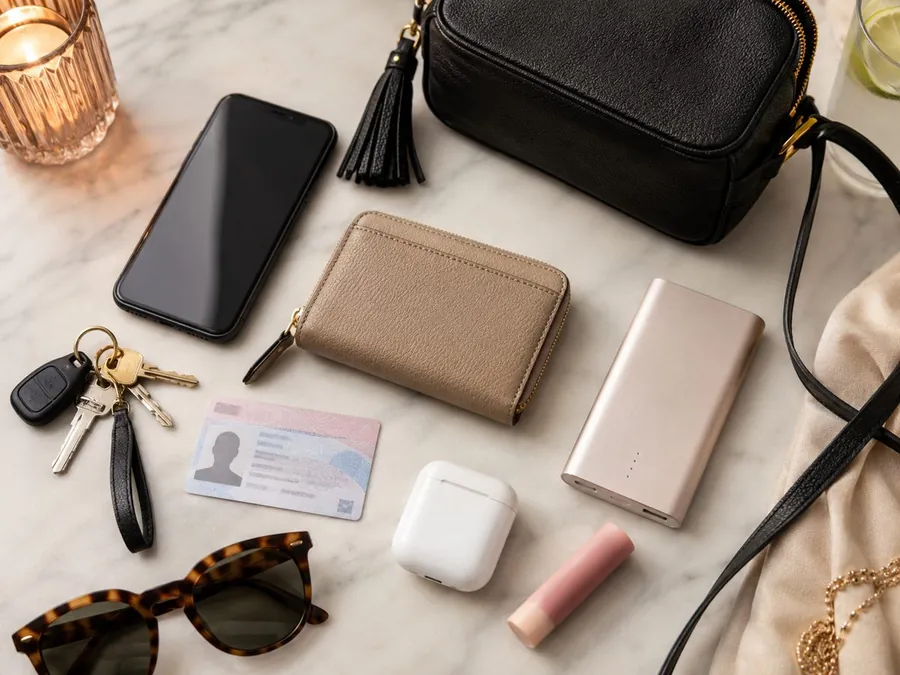
A small bag with ID, payment method, keys, phone, and one or two useful items is usually better than carrying too much. Overpacking makes it harder to find what matters. Under-planning makes small problems harder to solve later.
Phone battery matters more than people think. If you get separated, need to call a ride, look up a route, message a friend, or ask for help, a dead phone removes your fastest option. For long nights, festivals, or multi-stop plans, a compact charger can be more useful than another outfit accessory.
The goal is not to prepare for every possible situation. It is to remove the obvious friction before the night starts.
Keep the drink decision simple
Drink safety becomes easier when you follow one simple standard: if you are no longer confident about the drink, do not keep drinking it.
That applies even if you feel awkward. It applies even if the drink was expensive. It applies even if you only stepped away briefly. It applies even if everyone else seems relaxed.
The better habit is to keep your drink in your hand, in your line of sight, or with someone you fully trust. When possible, receive drinks directly from the bartender, server, or event staff. If someone offers you a drink, use judgment. There is a difference between a close friend handing you a drink you expected and a loose social situation where the drink has passed through multiple people.
You do not need to explain yourself every time. “I’m good,” “I’ll grab my own,” or “I’m going to get a fresh one” are enough.
A safer night out often depends on making the low-drama choice early.

Crowded summer settings change the way you should think
A rooftop bar is different from a quiet dinner. A music festival is different from a house party. A beach bar is different from a first date. The habit stays the same — keep control of your drink — but the setting changes what “control” looks like.
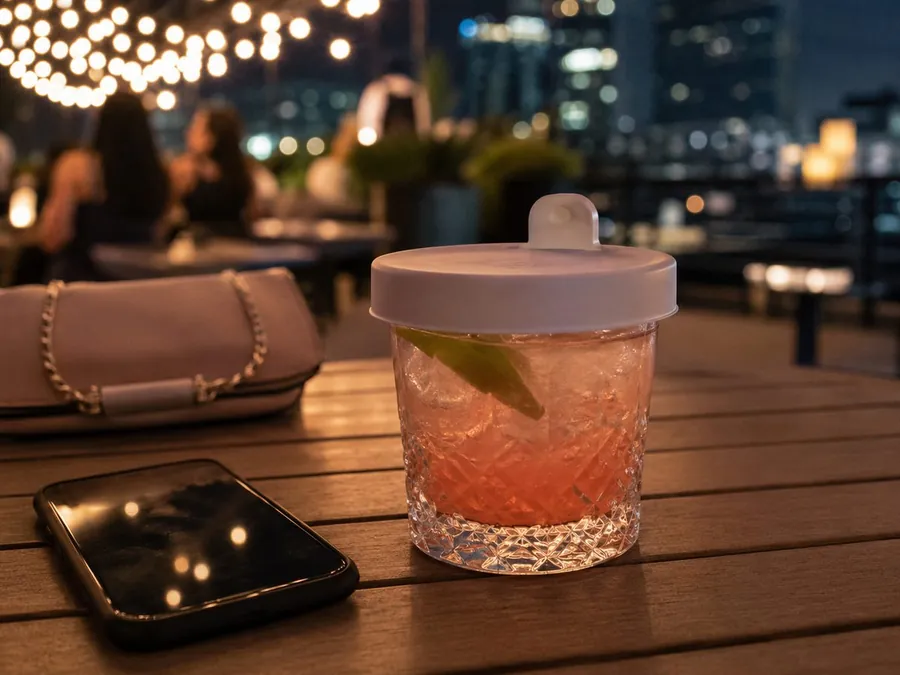
At a rooftop bar or patio, people move around often. A drink can be left on a ledge, table, or shared surface while someone takes a photo or talks to another group. In this setting, the main habit is simple: if you move, bring the drink with you.
At a concert or festival, distraction is the bigger issue. You may be watching the stage, checking your phone, moving through a crowd, or trying not to lose your friends. Simple drinks, fewer refills, and staying close to your group may matter more than carrying extra accessories.
At a house party, the risk is often informality. Drinks may be mixed in batches, left on counters, or passed around casually. Familiar surroundings can make people less careful, even though the same basic rules still apply.
On a date or smaller meetup, you may not have a full group around you. That makes your exit plan, phone battery, and personal boundaries more important.
The best habit is to adjust to the setting instead of pretending every night out works the same way.
Where drink safety accessories fit
Drink safety accessories can be useful when they reinforce habits you already plan to follow.
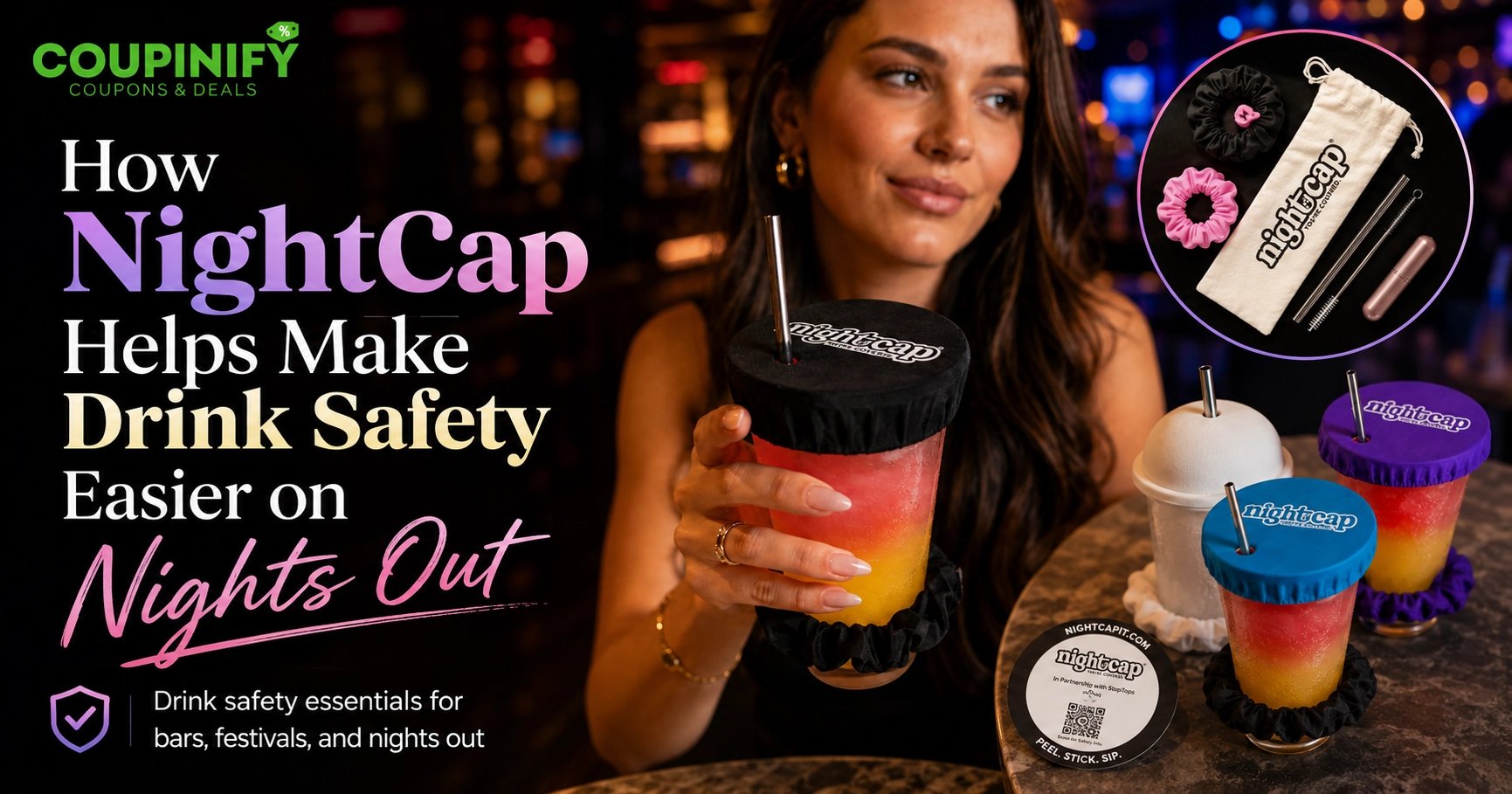
A drink cover, for example, may help reduce direct exposure on an open-top cup in crowded settings. It can also make you more intentional because using it reminds you to keep track of your drink. That makes it practical for outdoor bars, festivals, patio nights, concerts, and other situations where people stand, move, and talk while holding drinks.
This is where the Dining & Entertaining category fits naturally. It covers products designed around drink awareness and personal safety rather than general party supplies.
NightCap is one example of a brand in this space. It makes sense for people who want a small, easy-to-carry drink cover that can become part of a repeatable night-out routine. After deciding the product type actually fits how you go out, checking current NightCap offers on Coupinify can be a reasonable next step.
The important part is not treating the accessory like a guarantee.
A drink cover may help with an open drink. It does not make an unattended drink safe again. It may support awareness. It does not replace staying with trusted people. It can be useful in crowded settings. It cannot remove the need for judgment.
Good accessories reduce one type of risk. They do not solve the whole night.

A safer night out works in layers
It helps to think about drink safety in layers rather than one solution.
The first layer is behavior. Keep your drink with you. Order or receive it directly when possible. Replace it if you are unsure. Leave situations that feel wrong.
The second layer is people. Stay connected with friends. Check in before someone leaves. Notice when a friend suddenly seems unlike themselves. Do not let politeness stop you from asking a direct question.
The third layer is planning. Know how you are getting home. Keep your phone usable. Bring only what supports the night. Avoid carrying so much that your essentials become hard to manage.
The fourth layer is tools. A drink cover, phone charger, small crossbody bag, or location sharing app can help, but each one only works when it supports the first three layers.
That order matters. A useful accessory should make a good habit easier. It should not become a reason to stop paying attention.
When something feels off, act early
You do not need perfect certainty before taking action.
If you suddenly feel dizzy, confused, unusually drowsy, disoriented, or physically unwell in a way that feels out of proportion, take it seriously. Stop drinking. Tell someone you trust clearly. Move toward support, not isolation.
If you are with friends, stay together. Ask venue staff, security, or event support for help if needed. Use medical or emergency help when the situation calls for it. It is better to act early and be wrong than wait too long because you are worried about seeming dramatic.
The same applies if someone else in your group seems off. If a friend becomes unusually confused, weak, sleepy, or unable to manage themselves, do not brush it off as “just the night.” Stay with them, get help, and make sure they are not left alone.
A good group does not wait for certainty before protecting someone.

What to avoid
Some of the most useful safety choices are things you choose not to do.
Do not keep drinking from a cup you lost track of. Do not accept uncertainty just to avoid seeming rude. Do not rely on one tool to do everything. Do not leave a friend alone because the group feels ready to move. Do not assume a familiar venue or house party removes all risk. Do not overpack accessories you will not actually use.
The goal is not to make the night feel tense. The goal is to make safer decisions feel normal.
Replacing a drink is normal. Checking on a friend is normal. Leaving early is normal. Getting your own drink is normal. Changing plans when something feels wrong is normal.
The more normal those choices feel, the easier they are to make.
Plan the ride home before it becomes urgent
End-of-night decisions are often where people get sloppy. Everyone is tired. Phones are low. The group is split between leaving, staying, eating, or going somewhere else.
A safer plan is to decide earlier how you will leave.
That might mean booking a rideshare, knowing the public transit route, having a designated driver, walking with friends along a familiar route, or setting a check-in time. The exact method matters less than not improvising everything at the worst moment.
If someone wants to leave alone, check whether they are actually okay. If a friend seems unwell, do not let them disappear into a ride without support. If the plan changes, say it clearly in the group chat.
The ride home is part of the night, not an afterthought.

Final take
Drink spiking prevention is not about being fearful every time you go out. It is about building small habits that hold up when the night gets crowded, social, and unpredictable.
Keep your drink in your control. Replace it when you are unsure. Stay close to people you trust. Know how you are getting home. Use drink safety accessories if they genuinely fit your routine, but do not expect any single item to replace awareness.
A summer night out should still feel fun. The best safety habits are the ones that help you enjoy it with fewer blind spots.
For broader seasonal safety and everyday carry ideas, the Safety Accessories hub can support related planning beyond drink safety alone.
A safer night out does not need a complicated system. Keep your drink with you, stay connected with people you trust, know how you are getting home, and replace anything you are unsure about. Accessories can help, but they work best when they support habits you already plan to keep.