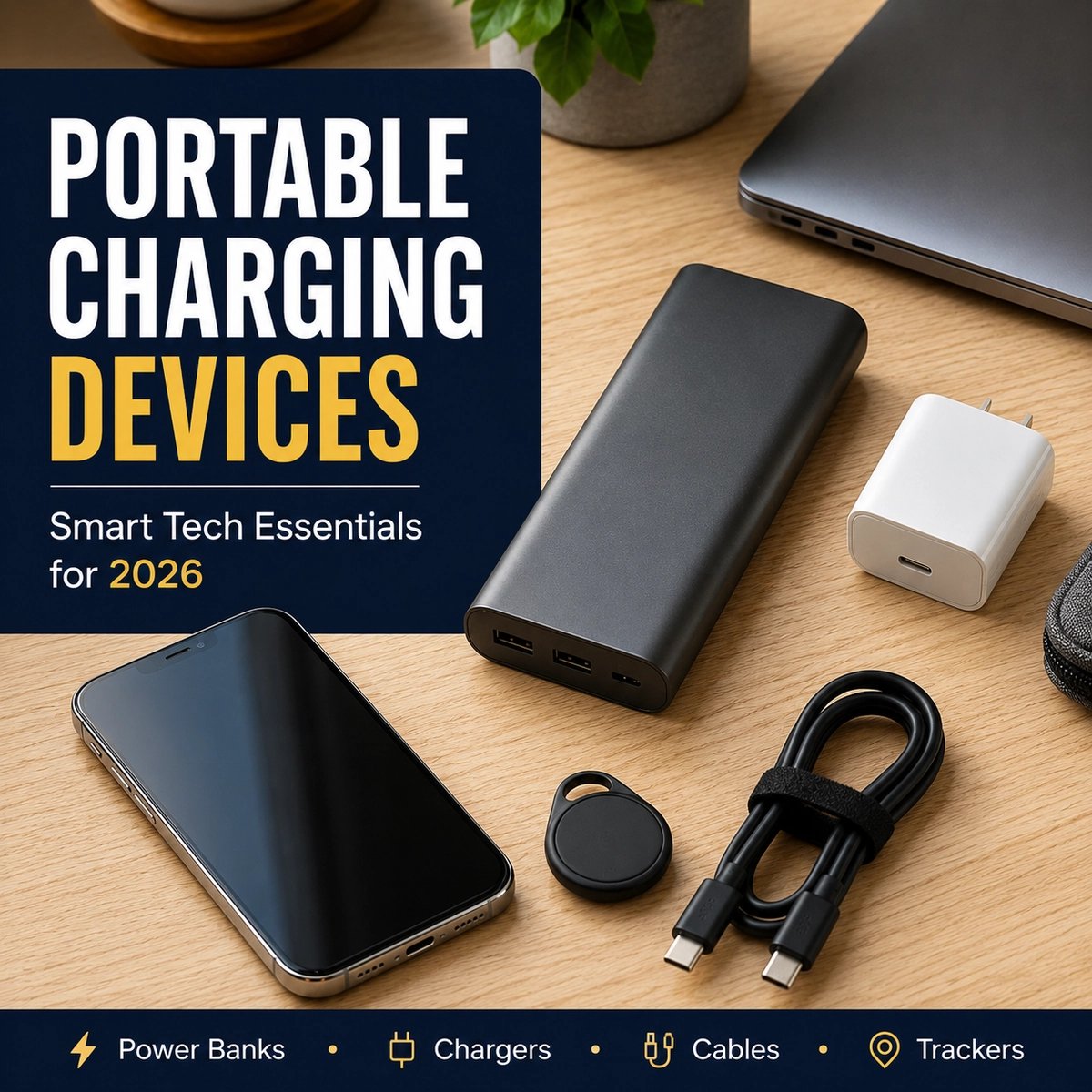
Best Portable Chargers for Travel in 2026 (Practical Buying Guide)
Key Takeaways
- Best portable chargers for travel in 2026 fit trip length, devices, charging speed, and packing style, not just battery size.
- Capacity ranges: 5,000-10,000 mAh for short trips, 10,000-20,000 mAh for balanced use, and 20,000 mAh+ for multiple devices/long days.
- Prioritize USB-C output, fast charging support, and clear wattage for quicker recharges during limited travel windows.
- Ensure ports and built-in cables match your devices, like USB-C, to avoid extra clutter and ensure compatibility.
- Size and weight are crucial; choose a charger that's practical to carry daily, fitting your bag and packing style.
- Find deals on Coupinify's Portable Chargers category and check MOVESPEED coupons for specific offers.
A portable charger can save a travel day, but the wrong one can become dead weight in your bag. A tiny power bank may not last through airport delays, maps, photos, and ride apps, while a large high-capacity charger can feel unnecessary if you only need emergency phone backup.
The best portable charger for travel in 2026 is not simply the biggest battery. It is the one that fits your trip length, device setup, charging speed needs, and packing style.
This guide helps you choose a travel-friendly power bank by comparing capacity, wattage, ports, size, cable setup, and real travel use cases, so you can decide whether a compact charger, mid-capacity power bank, or larger multi-device option makes the most sense.
Why portable chargers are useful for travel
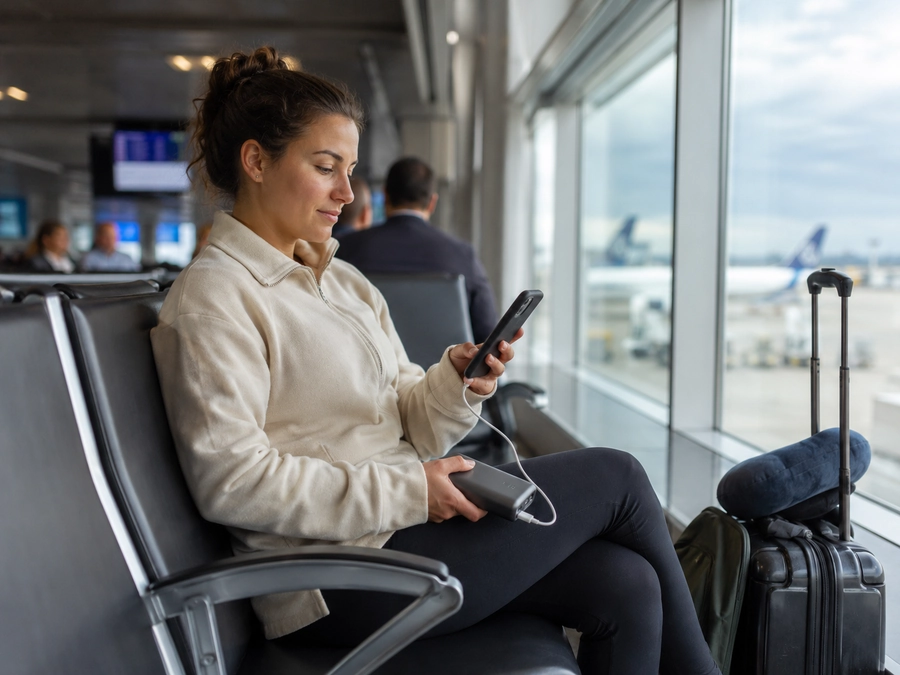
Modern travel depends heavily on mobile devices. Your phone is no longer just for calls. It may hold your boarding pass, maps, payment apps, ride-hailing account, hotel details, entertainment, camera, emergency contacts, and translation tools.
Battery drain usually becomes a problem during:
- airport layovers
- long sightseeing days
- train or bus travel
- road trips
- outdoor activities
- festivals and events
- photo-heavy trips
- international travel with maps and translation apps
A portable charger gives you backup power when outlets are not available, crowded, or inconvenient. It also keeps you from stopping your day just to look for a charging spot.
That said, not every power bank is a good travel charger. Some are too bulky, some charge too slowly, and some use ports or cables that do not match your current devices. A good travel charger should be easy to carry, easy to understand, and strong enough for your actual trip.
Portable charger vs power bank: are they the same?
In everyday shopping, “portable charger” and “power bank” are often used for the same type of product: a rechargeable battery pack that stores power and charges devices through USB, USB-C, or built-in cables.
The difference is mostly wording:
- Portable charger focuses on the use case: charging while moving.
- Power bank focuses on the device type: a stored battery pack.
For travel, both terms matter because people search for both. What matters more than the name is whether the charger fits your trip length, device setup, and packing style.
How much portable charger capacity do you need?
Capacity is usually measured in mAh. A higher mAh number generally means the charger can store more power, but it also usually means more size and weight.
Here is a practical way to compare common travel power bank ranges:
| Capacity Range | Best For | Main Tradeoff |
|---|---|---|
| 5,000–10,000 mAh | Short trips, daily carry, emergency phone backup | Lightweight, but limited backup power |
| 10,000–20,000 mAh | Airports, weekend travel, long sightseeing days | Best balance for many travelers |
| 20,000 mAh+ | Multiple devices, long travel days, heavier device use | More power, but bulkier to carry |
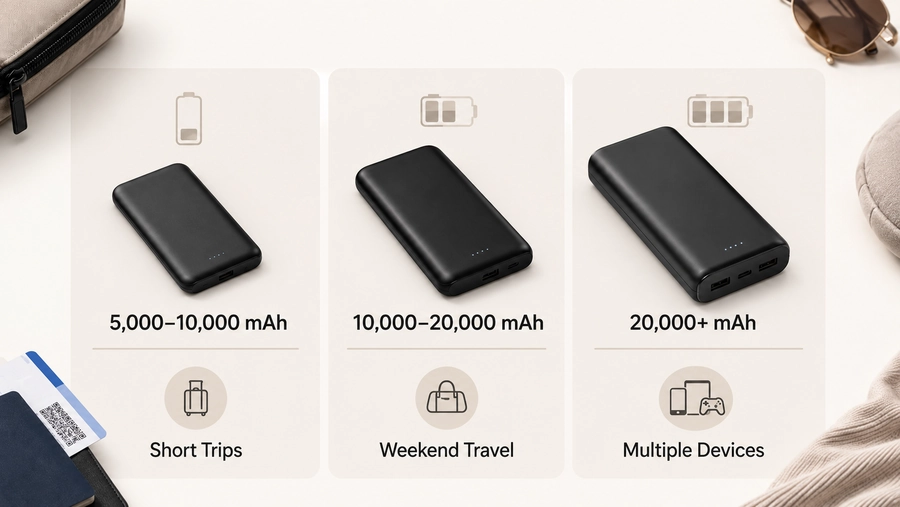
Capacity should match your actual behavior. If you only need emergency power for one phone, a compact charger may be enough. If you use your phone all day for maps, video, photos, messaging, and mobile data, a mid-capacity charger is usually more practical. If you need to charge several devices or share power with another person, a larger power bank may be worth the extra weight.
Small capacity chargers: best for light travel
Small portable chargers are usually the easiest to carry. They work well for people who want backup power in a small bag, sling, purse, or daily backpack.
Choose a small charger if:
- you mainly need emergency phone power
- you take short city trips
- you prefer lightweight bags
- you do not carry many devices
- you want something simple for everyday carry
The downside is limited backup power. A compact charger is useful as a safety net, but it may not be enough for long travel days, multiple devices, or heavy phone use.
Mid-capacity chargers: the best balance for most travelers
For many travelers, the 10,000–20,000 mAh range is the most practical. It usually gives enough backup power for long days without becoming too large for a backpack, carry-on, or day bag.
This range works well for:
- airport travel
- weekend trips
- city sightseeing
- road trips
- long days away from a hotel
- charging a phone plus earbuds or a smartwatch
A mid-capacity power bank is often the safest default if you are not sure what to buy. It gives more flexibility than a small charger while staying more portable than a very high-capacity model.
High-capacity chargers: useful, but not always better
A larger power bank can be useful if you travel with multiple devices or spend long periods away from outlets. It may also make sense if you use your phone heavily for video, navigation, hotspot access, or work.
Choose a higher-capacity charger if:
- you travel for long days
- you charge more than one device
- you carry a tablet or small work device
- you share charging with another person
- you often use your phone for maps, camera, and mobile data
Skip a large power bank if you mostly need emergency phone backup or prefer lightweight packing. A charger that is too bulky may stay in your hotel room or at the bottom of your bag, which defeats the purpose of carrying one.
Charging speed and wattage
Capacity tells you how much power a charger can store. Wattage tells you how quickly it can deliver that power to your device.
This matters during travel because you may only have a short window to charge. A faster charger can help before boarding, between rides, during a meal break, or while getting ready to leave the hotel.
When comparing charging speed, look for:
- USB-C output
- fast charging support
- clear wattage information
- compatibility with your phone or tablet
- enough output for the device you plan to charge
Avoid choosing a charger only because the product page says “fast charging.” The specs should clearly explain the port type, output, and compatibility. A charger with vague output information may be harder to match with your devices.
Ports and cable setup
A portable charger is only useful if it works with the devices and cables you actually carry. This is where many buyers make mistakes.
Before choosing a charger, check:
- Does it have USB-C?
- Does it still use USB-A?
- Can it charge more than one device?
- Does it support your main charging cable?
- Do you need to pack an extra cable?
- Does it have built-in cables, and are they the right type?
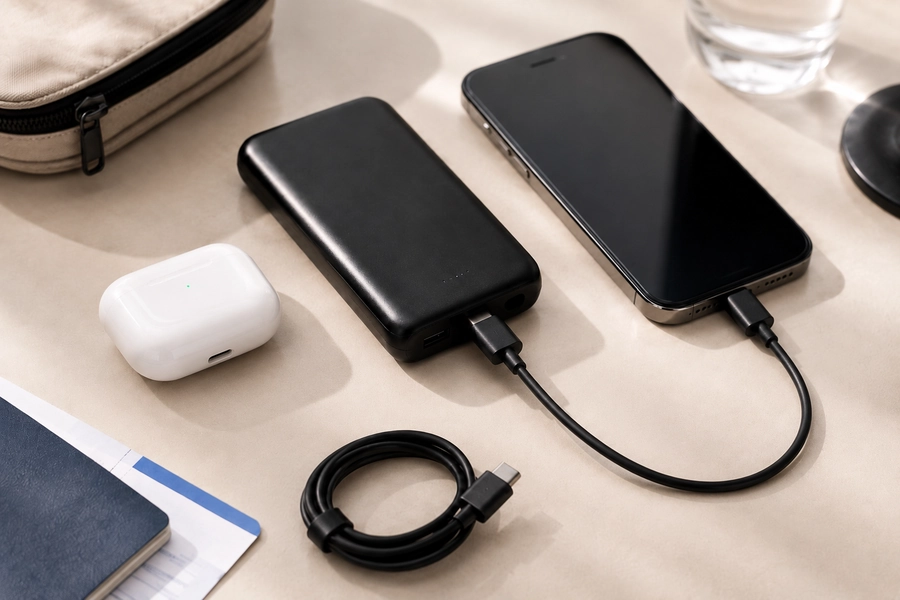
A simple single-port charger may be fine for one phone. A multi-port charger is better if you carry earbuds, a smartwatch, tablet, camera, or another traveler’s phone. More ports are helpful only if the charger also has enough capacity and output to support them.
Size and weight matter more than specs alone
A power bank can look impressive online but feel inconvenient during a real trip. If it is too heavy, you may avoid carrying it. If it is too thick, it may not fit in your small bag. If it needs extra cables, it may add more clutter than expected.
Think about where the charger will live during your trip:
- sling bag
- purse
- backpack
- camera bag
- carry-on
- car console
- hotel day bag
A charger for daily city travel should be compact. A charger for road trips, long transit days, or outdoor plans can be larger. The best choice depends on your packing style, not only the technical specs.
Best travel use cases for portable chargers
Airport travel
Airport days can drain your phone quickly. You may use your phone for boarding passes, airline apps, ride apps, maps, food orders, messages, and entertainment. Outlets may be crowded or far from your seat. A portable charger gives you more control during delays, layovers, and long connections.
Long sightseeing days
City travel often means using maps, photos, mobile data, translation apps, and messaging for hours. A mid-capacity charger works well here because it can keep your phone alive without adding too much weight.
Road trips
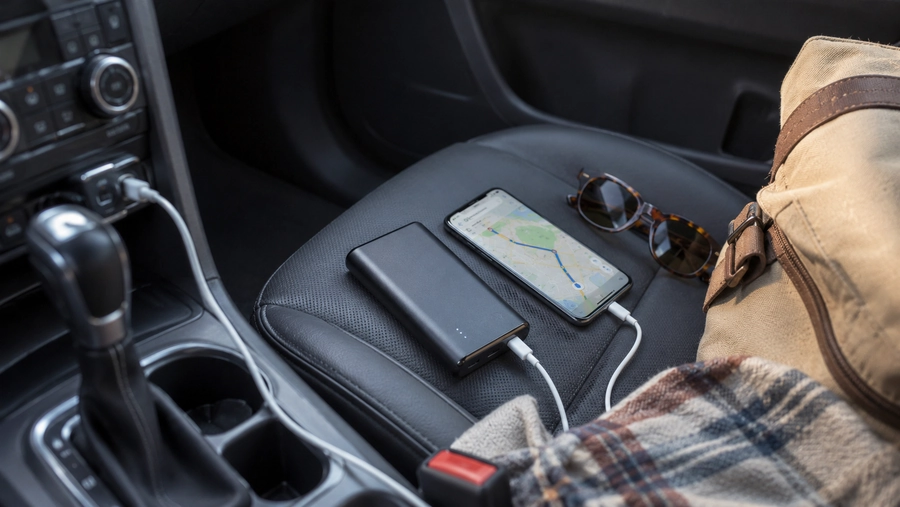
Even if your car has a charger, a power bank is still useful when you leave the car, sit in the back seat, stop outdoors, or need to charge multiple devices at once.
Outdoor activities
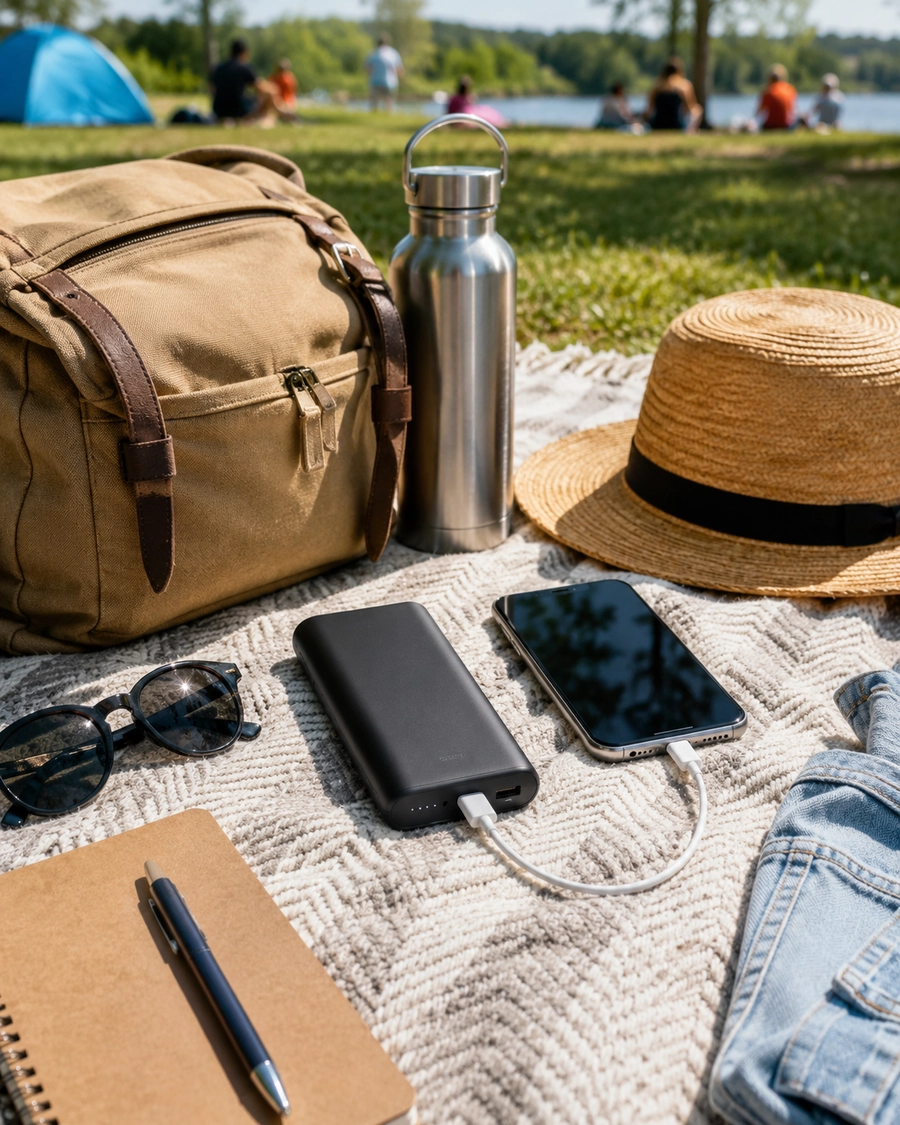
For picnics, hikes, festivals, beach days, camping-style trips, and long outdoor events, a portable charger helps when outlets are not available. In these situations, portability and reliability matter more than buying the largest charger possible.
Work travel
If you travel for meetings, coworking, or remote work, a portable charger can support your phone, earbuds, hotspot, or tablet. For laptop charging, check output requirements carefully instead of assuming every power bank can handle it.
Who should buy a compact portable charger?
A compact portable charger is best for people who want lightweight emergency power. It works when the goal is simple: keep your phone from dying before you get home, back to the hotel, or to the next charging spot.
Buy a compact charger if:
- you mainly charge one phone
- you prefer small bags
- you travel light
- you do not need tablet or laptop charging
- you want everyday backup power
Skip a compact charger if you regularly charge multiple devices, travel for full days, or rely heavily on your phone for maps, photos, mobile data, and video.
Who should buy a higher-capacity power bank?
A higher-capacity power bank makes more sense if battery anxiety is a regular problem during your trips. It is also useful if you often charge more than one device.
Buy a larger power bank if:
- you travel with multiple devices
- you take long flights or long road trips
- you use your phone heavily all day
- you need backup power for more than one person
- you want fewer recharges between uses
Skip a large power bank if you value lightweight packing, only need emergency phone backup, or rarely stay away from outlets for long.
What to avoid when choosing a travel power bank
Not every charger is worth packing. Be careful with:
- unclear capacity information
- unclear wattage or output details
- chargers that are too heavy for your bag
- ports you no longer use
- models that require uncommon cables
- vague “fast charging” claims
- very large power banks without checking travel rules
- low-quality product pages with poor compatibility details
A travel power bank should make your trip easier. If it adds cable clutter, weight, or confusion, compare other options before buying.
Where to check portable charger deals
After you know what capacity, port setup, and charging speed fit your trip, it becomes easier to compare offers without getting distracted by specs you do not need.
For broader browsing, start with Coupinify’s Electronics & Technology category, then narrow into the Portable Chargers category for more specific charging and power offers.
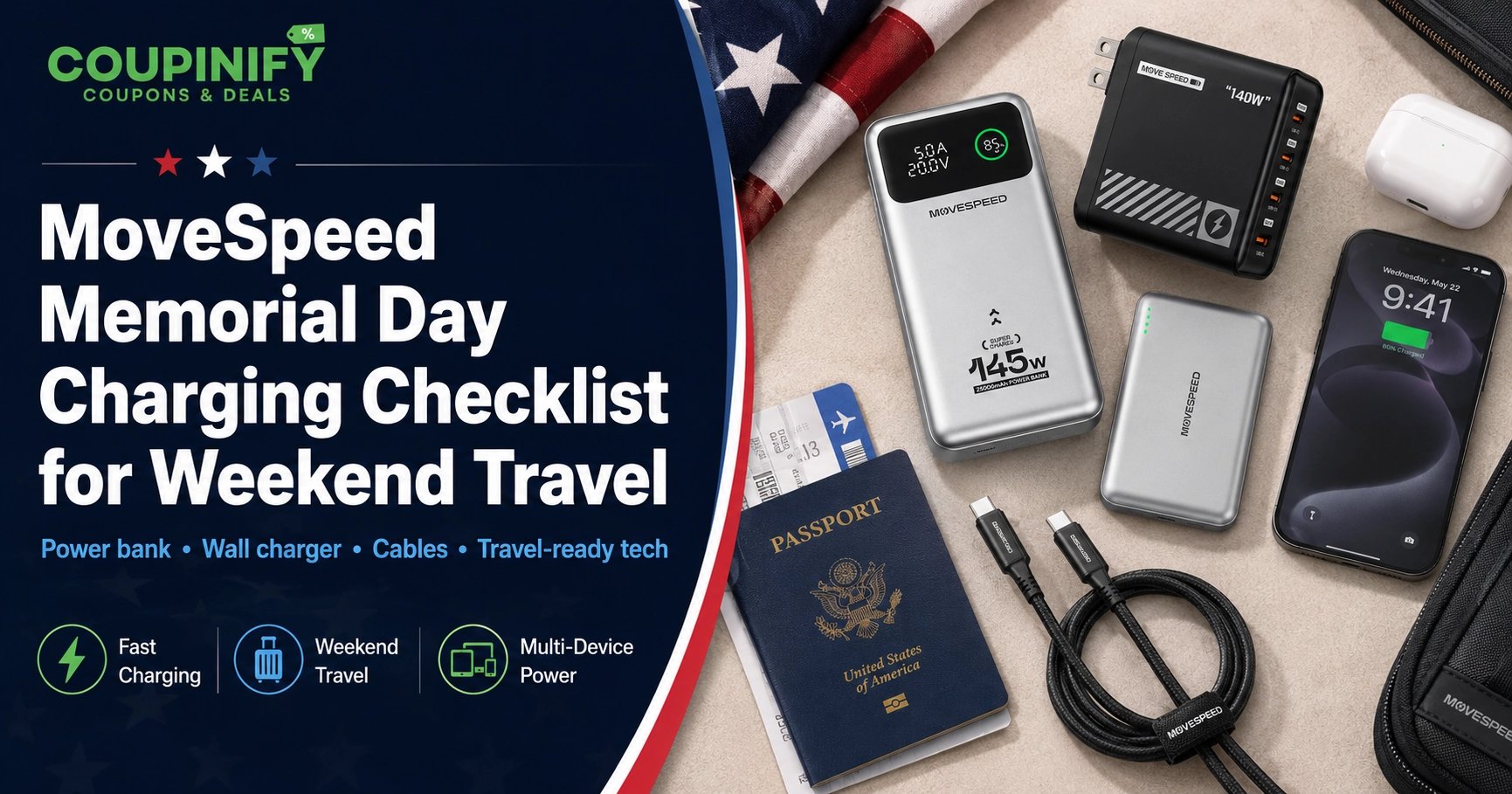
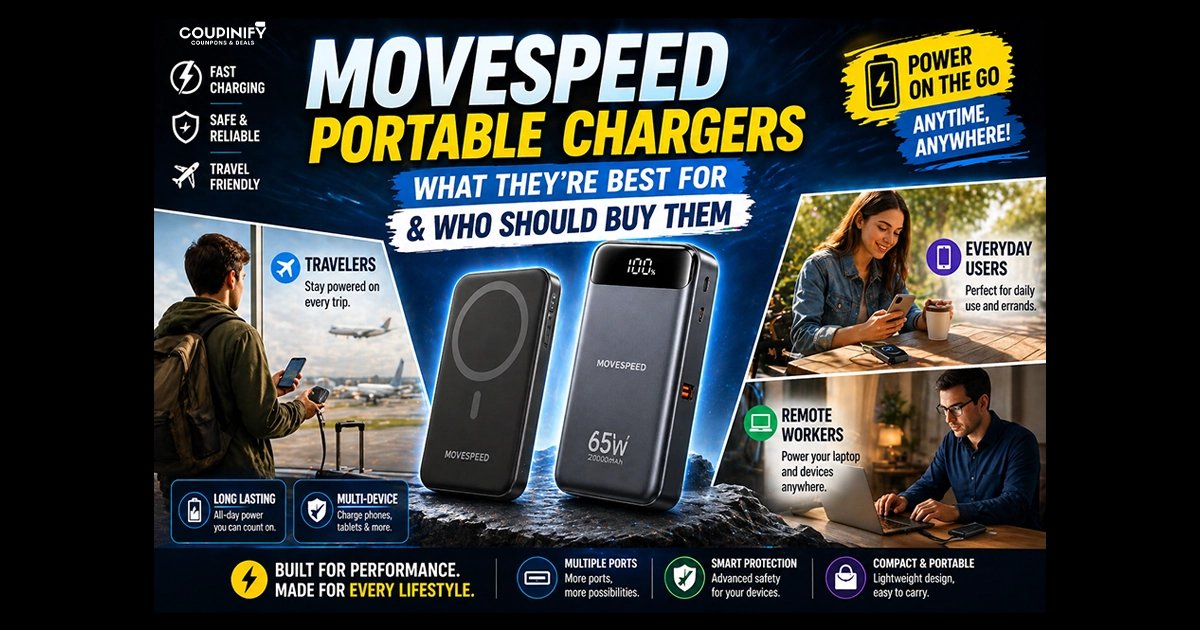
For MOVESPEED-related charging accessories and current offers, you can check the MOVESPEED coupons and deals page on Coupinify before buying.
The better approach is to choose the type of charger first, then look for available deals. That helps you avoid buying a larger, heavier, or less compatible power bank just because it looks discounted.
Tips for using portable chargers while traveling
Charge your power bank before the travel day
A portable charger only helps if it is charged. Make it part of your pre-trip checklist, especially before flights, road trips, or full-day outdoor plans.
Pack the right cable
Many charging problems come from packing the wrong cable. Carry at least one cable that works with your main phone and your power bank.
Keep the charger accessible
Do not bury your power bank at the bottom of your luggage. Keep it in a day bag, backpack pocket, or carry-on area where you can reach it quickly.
Start charging before your phone hits zero
Do not wait until your phone is almost dead. Charging earlier gives you more flexibility and reduces the chance of running out of power during maps, tickets, or payment use.
Check travel rules before flying
Portable chargers contain batteries, so travel rules can vary by airline, region, and battery size. Check your airline’s current rules before flying, especially if you carry a larger power bank.
Final buying advice
The best portable charger for travel in 2026 is the one that fits your trip, your devices, and your packing style.
Choose a compact charger if you only need emergency phone power. Choose a mid-capacity charger if you want the best balance for airports, sightseeing, weekend travel, and everyday carry. Choose a larger power bank only if you regularly charge multiple devices or spend long periods away from outlets.
Before buying, compare capacity, wattage, ports, cable setup, size, and travel rules. A good portable charger should reduce friction during a trip, not become another bulky item you do not want to carry.
FAQ
What capacity portable charger is best for travel?
For most travelers, a mid-capacity portable charger offers the best balance between backup power and portability. Smaller chargers are better for emergency phone power, while larger chargers are better for heavy device users or multiple devices.
Are portable chargers and power banks the same thing?
In most shopping contexts, yes. “Portable charger” usually describes how the product is used, while “power bank” describes the battery pack itself.
Are fast charging portable chargers worth it?
Fast charging is useful when your phone or device supports it and you have limited time to recharge. It is especially helpful during airport days, road trips, and long sightseeing schedules.
Is a larger power bank always better for travel?
No. Larger power banks can store more power, but they are heavier and less convenient to carry. The best option is the one you will realistically bring with you during the day.
Should I choose USB-C for a travel power bank?
USB-C is usually the better choice if your current devices already use USB-C. It can reduce cable clutter and may support faster charging depending on the charger and device.