RFID Wallet vs Smart Wallet: What’s the Difference and Which One Should You Choose?
Key Takeaways
- RFID wallets block radio frequency signals for card protection against unauthorized scanning, acting as a specific security feature.
- Smart wallets offer broader utility like slim storage, quick access, tracking, Bluetooth connectivity, Find My compatibility, and anti-loss alerts.
- The core difference is RFID wallets provide passive card protection, while smart wallets are a category for broader lifestyle and utility needs.
- Choose an RFID wallet for simple card security and familiar design. Choose a smart wallet for anti-loss support, slim carry, and quick access.
- Not all smart wallets include RFID blocking; check product specifications. A smart wallet with RFID offers both security and flexible utility.
- RFID blocking is useful for crowded spaces or contactless cards, but misplacing a wallet is a more common issue for many users.
If you are comparing an RFID wallet vs smart wallet, the confusion usually comes from the fact that these two categories can overlap, but they are not the same thing.
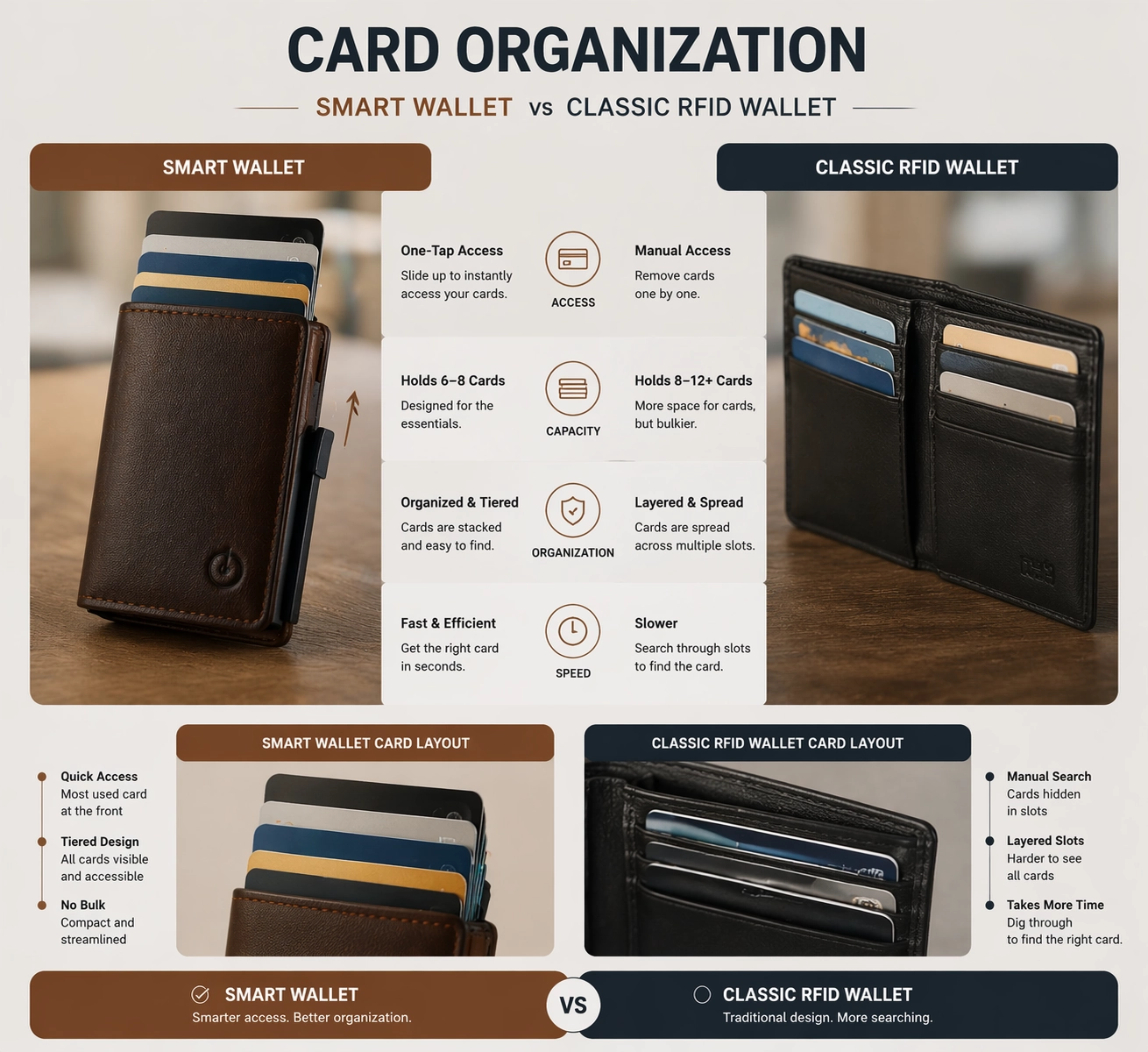
An RFID wallet is mainly focused on protecting your cards from unauthorized RFID scanning. A smart wallet is a broader category that may include tracking features, app connectivity, anti-loss tools, slim organization, and sometimes RFID-blocking materials too. In other words, one is a specific protective feature, while the other is often a more feature-rich everyday carry solution.
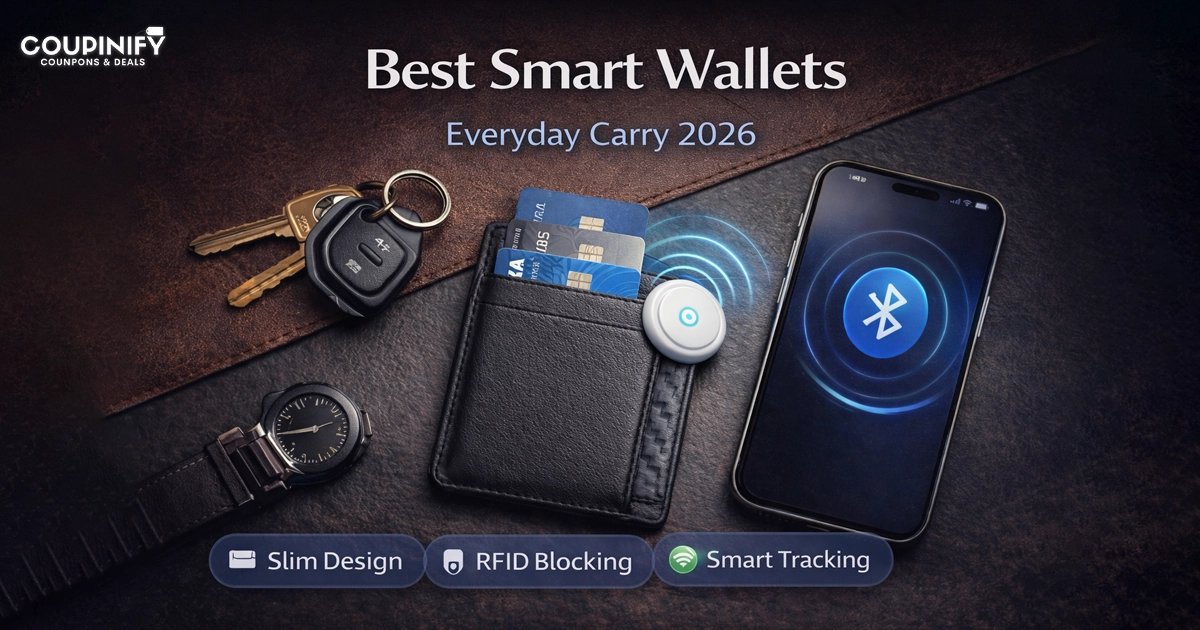
For anyone exploring modern wallet options, it helps to first understand how today’s smart wallets fit into the wider everyday carry ecosystem. From there, it becomes much easier to decide whether you only need card-security protection or a more advanced wallet that supports tracking, organization, and travel convenience.
What Is an RFID Wallet?
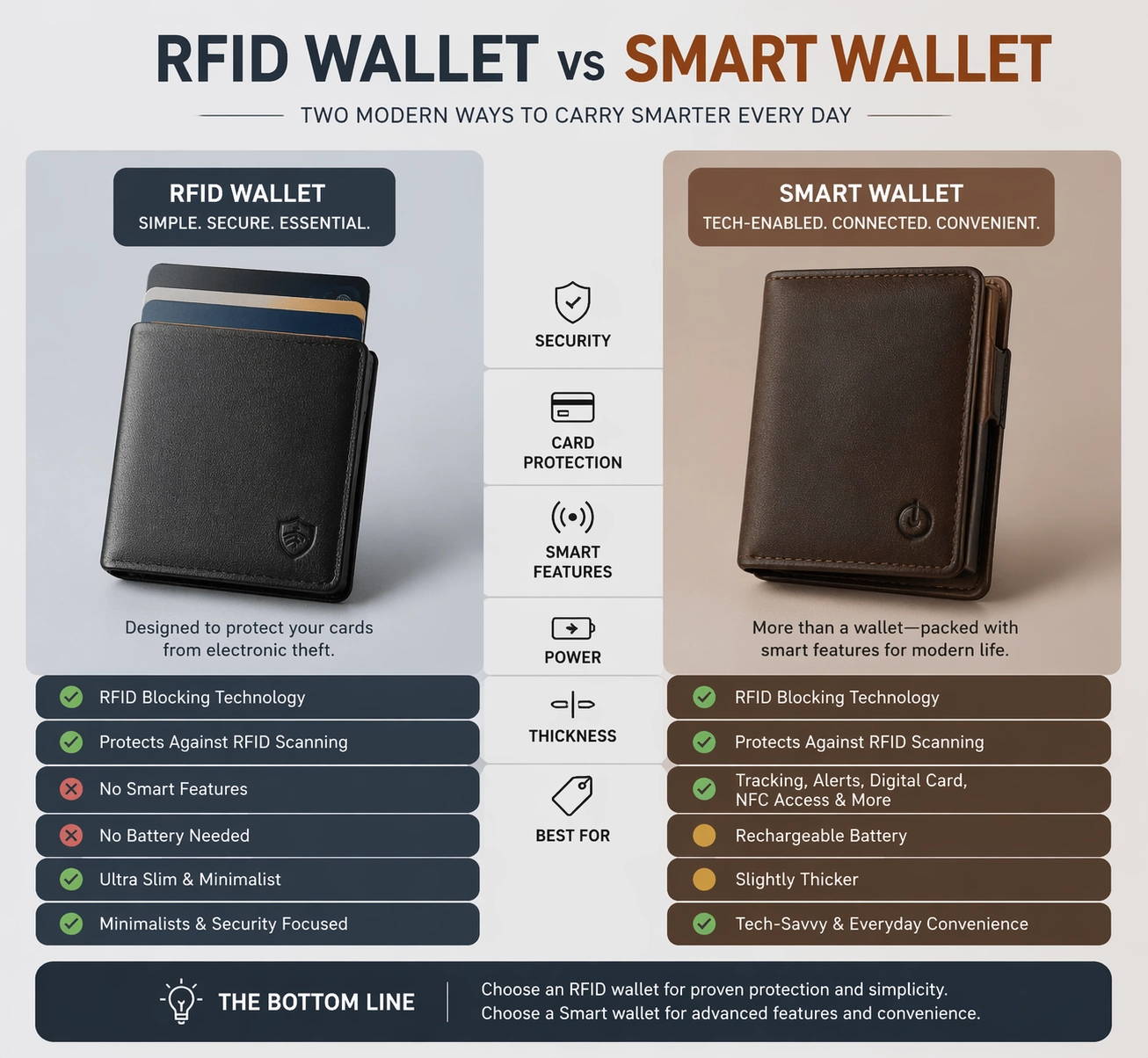
An RFID wallet is designed to block radio frequency signals that can be used to communicate with RFID-enabled cards. Some debit cards, credit cards, ID cards, and transit cards contain RFID chips, and the purpose of an RFID-blocking wallet is to reduce the risk of unauthorized scanning.
In practical terms, an RFID wallet usually looks and behaves like a normal wallet. The difference is in the material layer inside the wallet, which helps block those signals. Many RFID wallets are otherwise fairly traditional in design. They may be bifold, slim, minimalist, or travel-oriented, but their core value is still signal-blocking protection.
That means the main question an RFID wallet answers is simple:
How do I add an extra layer of card protection without changing my wallet habits too much?
What Is a Smart Wallet?
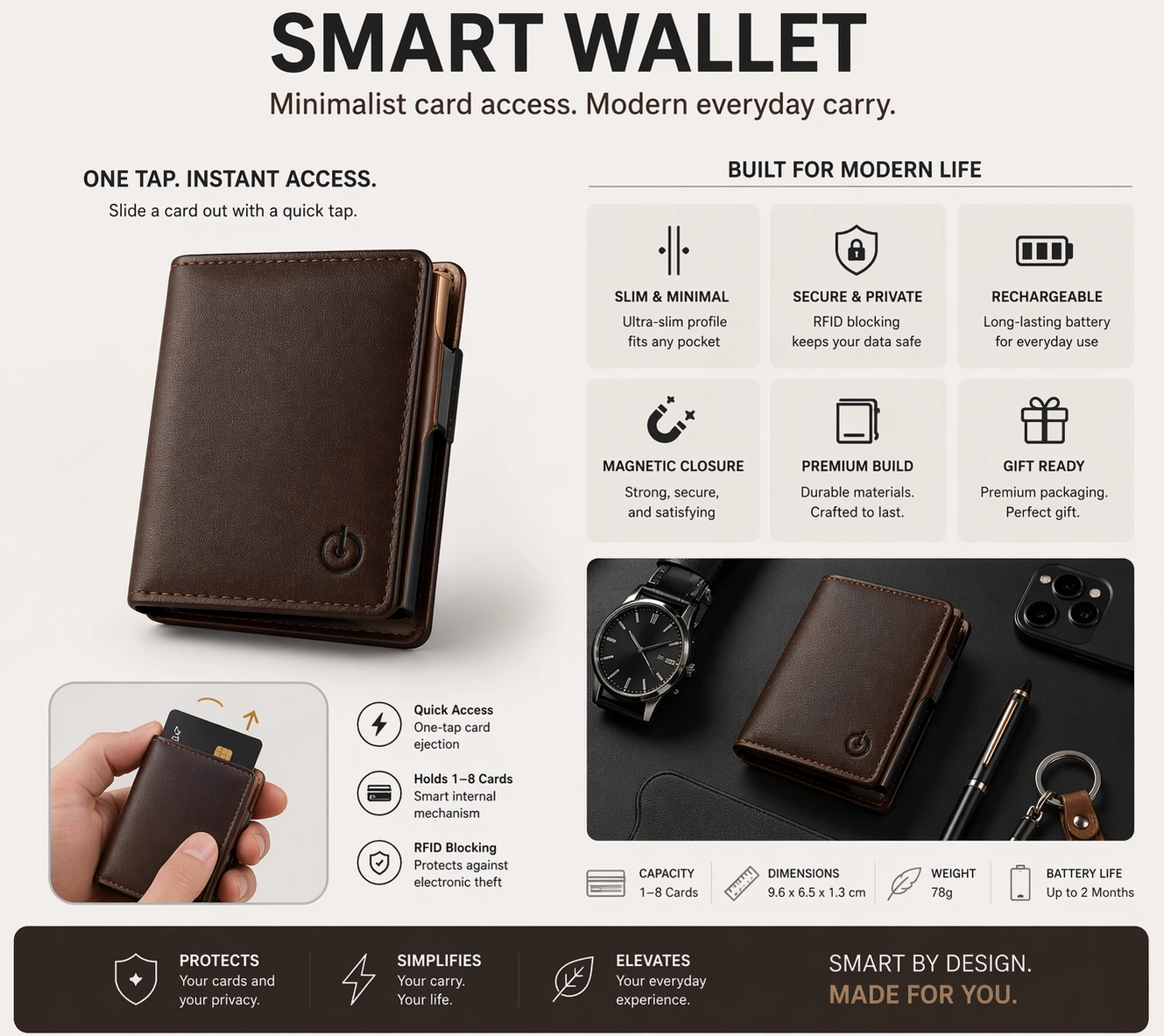
A smart wallet is a broader and more modern category. It can include slim storage, quick card access, tracking support, Bluetooth connectivity, Find My compatibility, anti-loss alerts, and modular everyday carry features.
Some smart wallets are focused on convenience. Others are built around travel, minimalism, or anti-loss protection. Many are designed for people who carry fewer cards, prefer a cleaner pocket profile, or want help locating a misplaced wallet.
If you are new to the category, this guide on how smart wallets work gives useful background on what makes them different from a standard wallet.
Importantly, some smart wallets also include RFID blocking, but not all of them do. That is why the comparison can feel confusing. A smart wallet may contain RFID protection, but a basic RFID wallet does not automatically become a smart wallet unless it adds more advanced utility.
The Core Difference: Protection Feature vs Product Category
The clearest way to compare these two is this:
- RFID wallet = a wallet defined by one main protective feature
- Smart wallet = a wallet category defined by broader functionality
An RFID wallet answers a narrow security concern.
A smart wallet answers a broader lifestyle and utility need.
You can think of RFID blocking as one possible feature inside a smart wallet, not the full definition of it.
RFID Wallet Priorities
- card protection
- simple familiar design
- often lower-tech
- good for people who want passive security
Smart Wallet Priorities
- tracking and anti-loss support
- slim carry and modern organization
- quick card access
- travel and everyday convenience
- sometimes RFID blocking too
This is also why many shoppers who already understand the difference between smart wallets and traditional wallets eventually narrow their choice down to a more specific comparison like this one.
When an RFID Wallet Makes More Sense
An RFID wallet may be the better choice if your main priority is simple card security and you do not care much about connected features.
It often makes sense for:
- people who want a familiar wallet format
- buyers who prefer lower-tech accessories
- users who mainly carry payment cards and ID
- shoppers who want a straightforward upgrade from a standard wallet
- anyone who worries about card skimming more than misplacing the wallet itself
This type of wallet is usually easier to understand at a glance. You buy it for one main reason, and that reason is clear. If you do not need app support, tracking, or special access mechanisms, an RFID wallet can be enough.
That said, many people now want more than just passive protection. They want a wallet that is easier to carry, easier to organize, and harder to lose.
When a Smart Wallet Makes More Sense
A smart wallet usually makes more sense when your priorities go beyond signal blocking.
It is often a better fit for:
- people who frequently misplace their wallet
- travelers who want better control over valuables
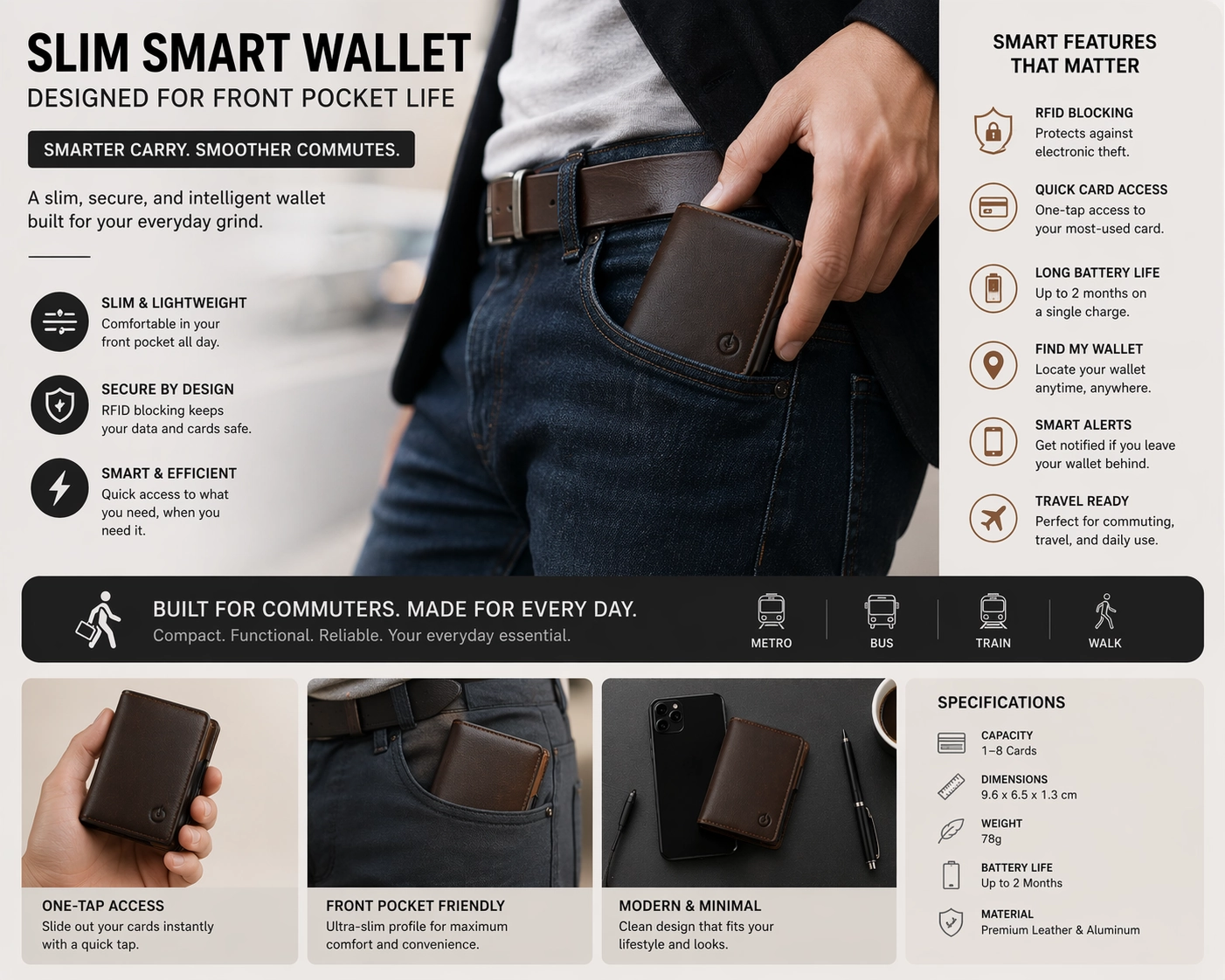
- minimalists who prefer a slim front-pocket carry
- users who like card pop-up systems or quick-access layouts
- buyers who want modern design with practical daily functionality
For everyday carry, this can be a major difference. A wallet that helps you find it, organize your essentials, and reduce pocket bulk may provide more day-to-day value than RFID blocking alone.
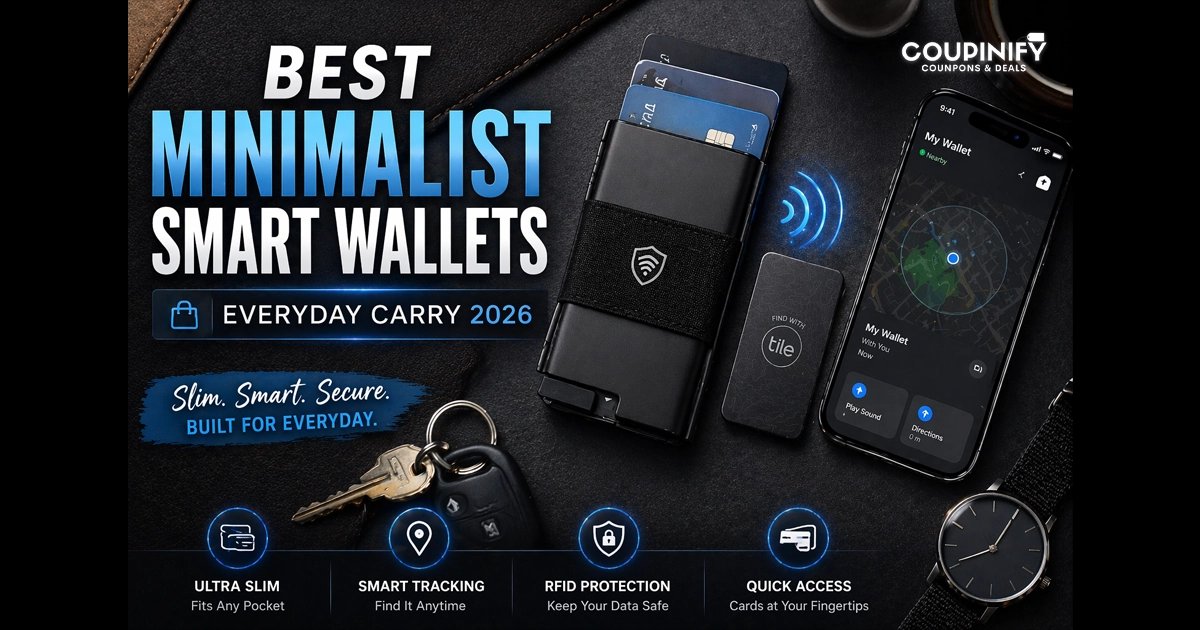
If your preference leans toward cleaner carry and modern design, articles like Best Minimalist Smart Wallets for Everyday Carry (2026) are especially useful because they show how the category has evolved beyond bulky traditional wallets.
Do You Actually Need RFID Blocking?
This is where the buying decision becomes more practical.
Many people hear “RFID” and assume it is a must-have feature no matter what. In reality, whether you need it depends on how much value you place on that extra protection compared with other wallet features.
You may want RFID blocking if:
- you regularly travel through crowded public spaces
- you carry multiple contactless cards
- extra peace of mind matters to you
- you prefer passive security features that do not require charging or setup
But RFID blocking alone may not solve the problems many people actually face every day. A lot of users are far more likely to misplace a wallet, overstuff it, or carry something too bulky than to experience unauthorized card scanning.
That is why many shoppers now prefer a smart wallet with a balanced feature set, especially if it combines slim organization, durable design, and optional RFID shielding.
Travel Use Cases: Which One Is Better?
For travel, the answer depends on what kind of traveler you are.
If your focus is mainly on carrying cards safely in transit, an RFID wallet may be enough. It is simple, lightweight, and gives reassurance around contactless cards.
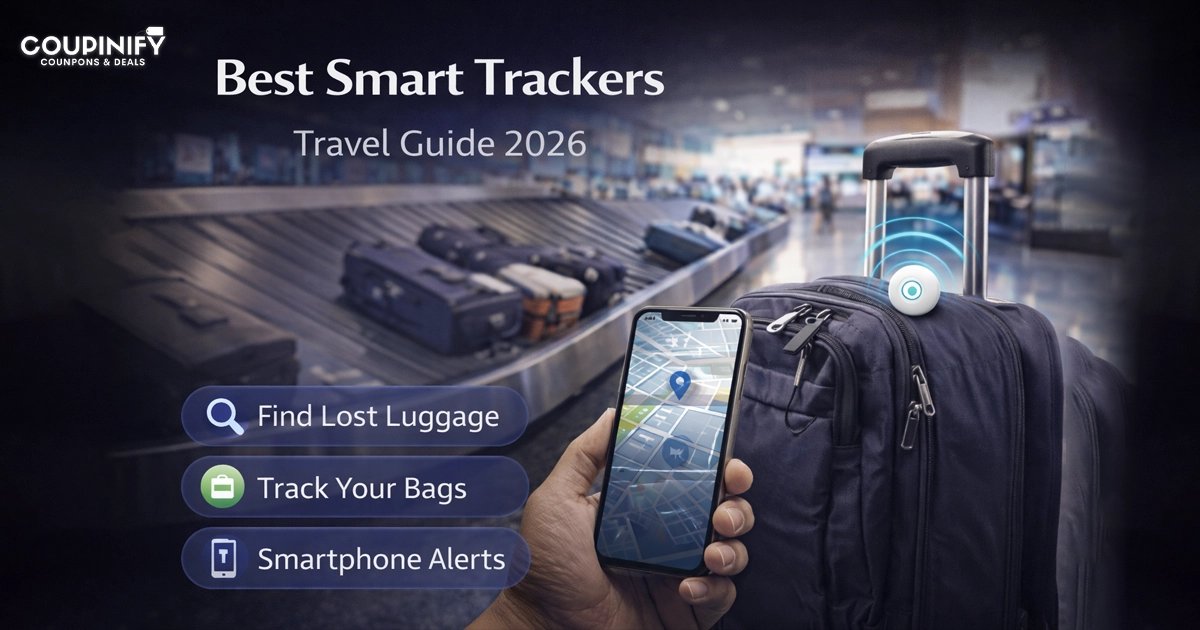
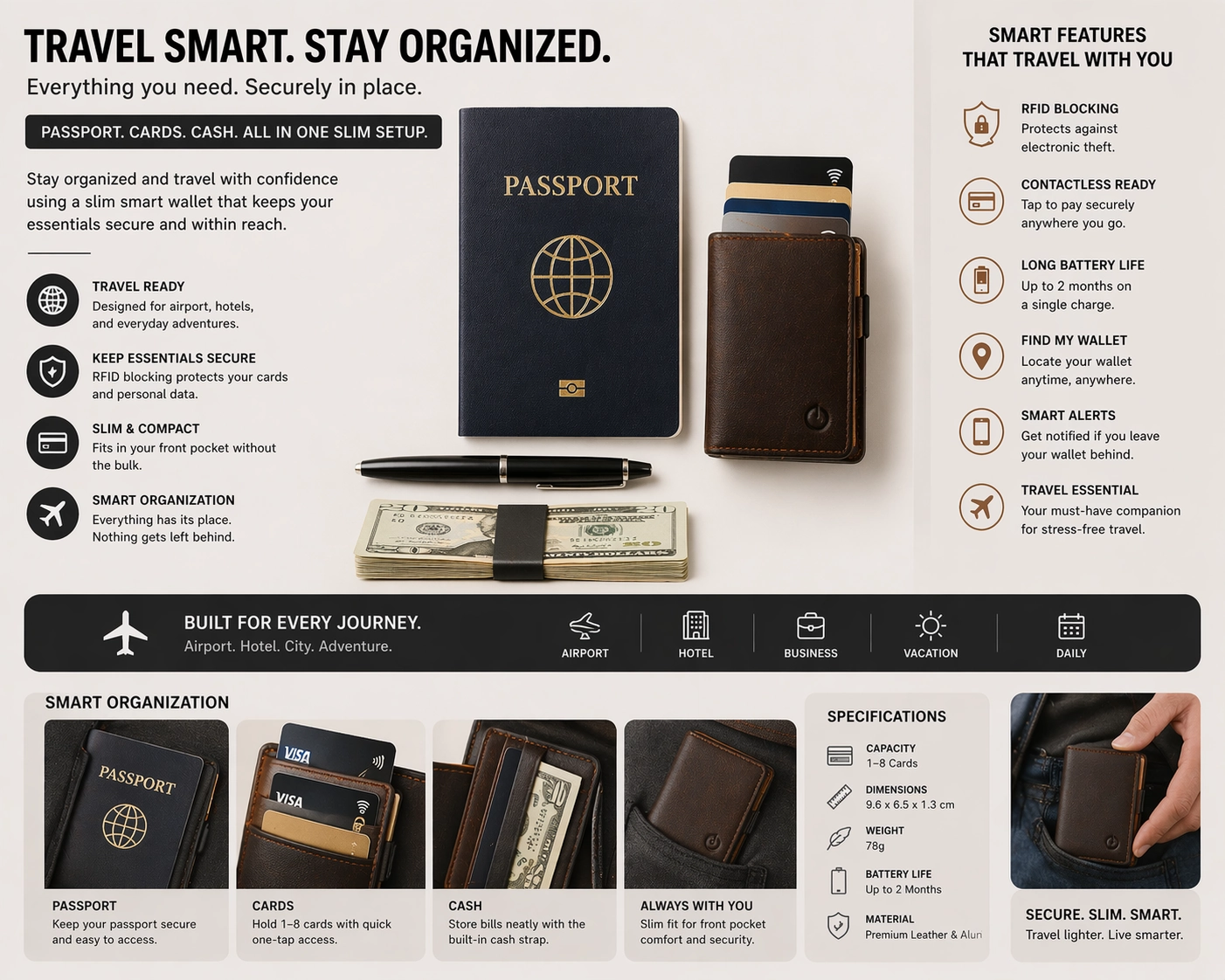
But if you travel often, a smart wallet can be more useful overall because travel problems are rarely limited to card scanning. Travelers also deal with:
- misplaced wallets in hotels or airports
- overpacked pockets or bags
- quick access needs at boarding, transit, and checkout
- the need to keep fewer but more important items organized
This is one reason broader anti-theft and travel-accessory content often connects naturally to the same ecosystem as electronics and technology, where modern carry tools, trackers, and smart accessories increasingly overlap.
Everyday Carry: Which One Feels Better in Real Life?
For many buyers, the better wallet is not the one with the most features. It is the one that fits real daily behavior.
Choose an RFID wallet if you want:
- a familiar wallet experience
- basic card protection
- little or no learning curve
- simple carry without connected features
Choose a smart wallet if you want:
- a slimmer profile
- easier card access
- anti-loss help
- more intentional organization
- a modern wallet built around convenience
This is where smart wallet brands that focus on minimal everyday carry can fit naturally into the category. For example, if you are browsing modern options through Coupinify’s ZENLET store page, the most useful lens is not hype or branding. It is whether that style of wallet matches your actual daily routine: fewer cards, slimmer pockets, quicker access, and smarter carry.
Pros and Cons at a Glance
RFID Wallet Pros
- simple and familiar
- passive protection
- no battery or app needed
- often easier entry point for cautious buyers
RFID Wallet Cons
- limited feature set
- may still be bulky depending on design
- does not help if you lose the wallet
- can feel like a small upgrade rather than a new carry system
Smart Wallet Pros
- broader functionality
- often slimmer and more modern
- may support tracking or anti-loss features
- better aligned with minimalist everyday carry
Smart Wallet Cons
- can cost more
- features vary widely by product
- some models may require setup or accessories
- not every smart wallet includes RFID blocking
So Which One Should You Choose?
Choose an RFID wallet if your main goal is straightforward card protection and you prefer a traditional wallet experience.
Choose a smart wallet if you want a wallet that does more: slimmer carry, faster access, better organization, and potentially location support or anti-loss features.
For many modern users, the real choice is not “security vs technology.” It is single-purpose protection vs multi-purpose convenience.
If you only want peace of mind around contactless cards, an RFID wallet is often enough.
If you want a wallet that better supports modern everyday carry, a smart wallet is usually the stronger long-term choice.
In short:
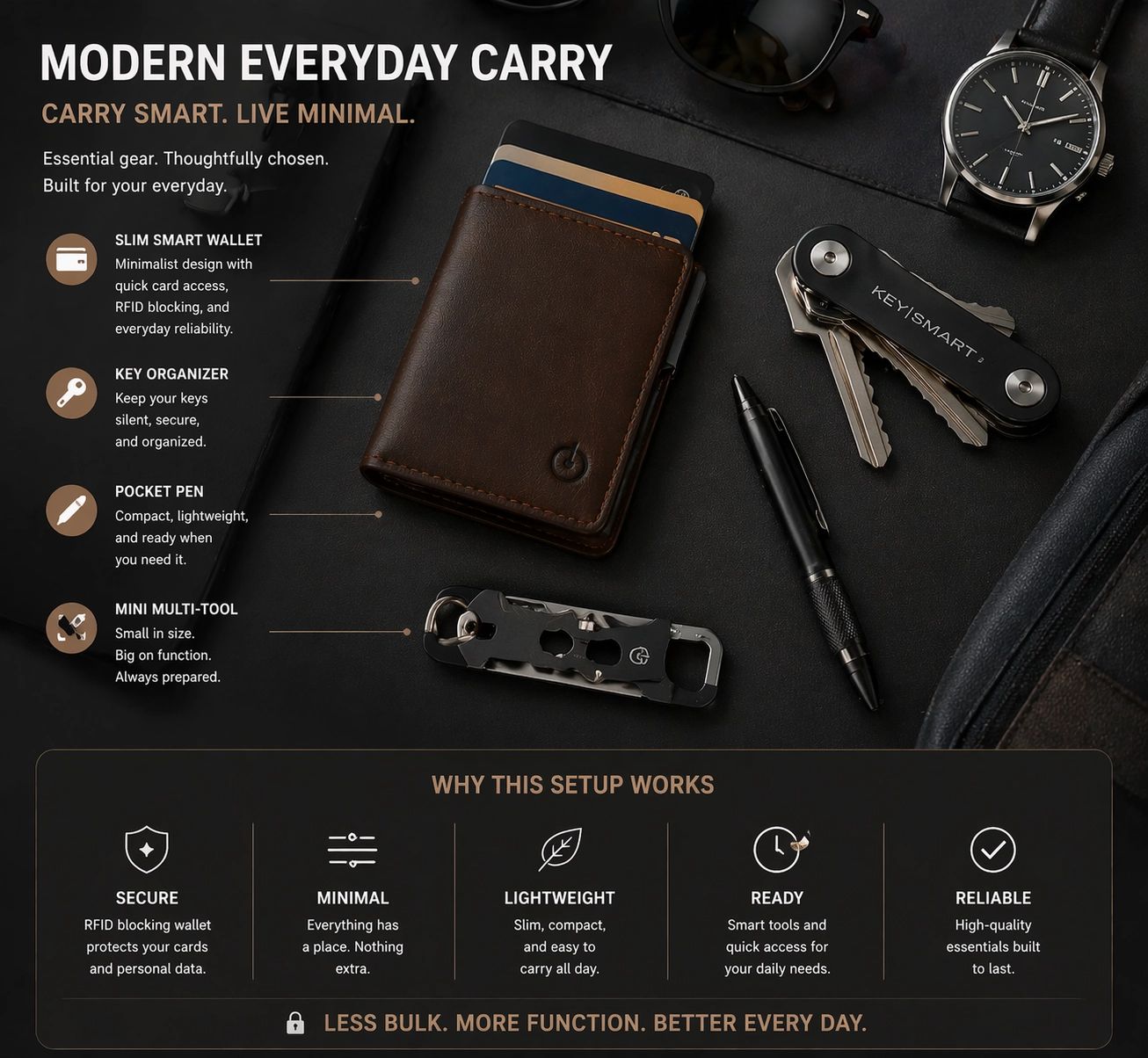
- RFID wallet = best for simple protection
- Smart wallet = best for flexible everyday utility
- Smart wallet with RFID blocking = best for buyers who want both
That final combination is often the sweet spot, especially for people who want to modernize their carry setup without giving up card security.
FAQ
Is every smart wallet RFID blocking?
No. Some smart wallets include RFID-blocking materials, but not all of them do. You need to check product specifications rather than assume the feature is included.
Is an RFID wallet the same as a smart wallet?
No. An RFID wallet focuses on blocking RFID scans, while a smart wallet is a broader category that may include tracking, quick-access design, slim storage, and other modern features.
Which is better for travel?
If you only want card protection, an RFID wallet can be enough. If you also want slimmer organization and anti-loss convenience, a smart wallet is often more useful for travel.
Are smart wallets worth it?
They can be, especially for people who value slim carry, quick access, better organization, and modern everyday convenience. The value depends on your habits and priorities.